Hypoplastic left heart syndrome (HLHS) is one of the most complex cardiac defects seen in the newborn. It is one of the most challenging to manage of all congenital heart defects. It is one of a group of cardiac anomalies that can be grouped together under the description single ventricle defects.
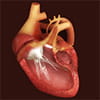
In a child with hypoplastic left heart syndrome, the structures on the left side of the heart are very underdeveloped. The left side of the heart gets the oxygen rich blood from the lungs. It then pumps the blood out to the body.
The mitral and aortic valves are either completely "atretic" (closed), or they are small (hypoplastic). The left ventricle is tiny. The first part of the aorta is very small. Often only a few millimeters around.
This results in a situation where the left side of the heart is unable to support the circulation needed by the body's organs. The right side of the heart is normally developed. The right side of the heart pumps blood to the lungs.
Because the left side of the heart is so small, blood returning from the lungs to the left atrium must pass through an
atrial septal defect (ASD)
to the right side of the heart.
The right ventricle must then pump blood both to the lungs and out to the body. The patent ductus arteriosus, a normal structure in the fetus, is often the only pathway through which blood can reach the body from the heart. When the ductus arteriosus begins to close, the blood flow to the body will decrease, leading to very low blood flow to vital organs. This can lead to shock.
Without treatment, hypoplastic left heart syndrome is fatal. This happens within the first hours or days of life.
Signs and Symptoms
Newborns with hypoplastic left heart syndrome will have lower-than-normal oxygen saturations. This is because all the blood from the lungs mixes in the single right ventricle before being pumped out of the lungs and body.
Cyanosis, or blue coloration of the skin, may be the first clue to a serious cardiac condition. Respiratory distress (difficult or fast breathing) is often present because the lungs will get a large amount of blood flow. There is often no or just a faint murmur present in newborns with HLHS.
The pulses may be very weak in all extremities on examination depending on flow through the ductus arteriosus. Sleepiness, poor feeding, and worsening respiratory distress may be seen as the ductus arteriosus closes. Shock leading to seizures, kidney failure, liver failure, and worsening cardiac function may develop. These problems may be reversible depending on how severe or how long it lasts.
Diagnosis of Hypoplastic Left Heart Syndrome
This heart defect is diagnosed on fetal fetal echocardiograms. It is one of the most common cardiac defects found on screening ultrasounds. Early diagnosis of the defect allows for prompt intervention at the time of birth.
Planning to deliver an infant at a hospital capable of aggressive newborn resuscitation is important in improving the chances for a good outcome.
Echocardiograms can give detailed information of the anatomy of the various cardiac structures affected in hypoplastic left heart syndrome. They also give important information about the function of the right ventricle, the heart valves, the size of the atrial septal defect and the size of the patent ductus arteriosus.
Cardiac catheterization is rarely used as part of the initial evaluation. This is due to the high risks in an unstable newborn. Catheterization does help evaluate cardiopulmonary function and anatomy in older children with hypoplastic left heart syndrome. It can help with planning for later stages in the treatment.
The management of the newborn with hypoplastic left heart syndrome can be divided into the initial stabilization period and the operative / post-operative period.
If the fetus has been diagnosed before delivery, stabilization measures are started immediately so the newborn does not become unstable. In newborns that are delivered and then later suspected of having hypoplastic left heart syndrome, stabilization begins while diagnostic tests are going on. The rapid stabilization of these infants must begin as soon as the diagnosis is suspected.
Catheters (tubes that carry medicine) are placed, in the umbilical blood vessels. This allows medications to be given and blood to be drawn for testing. An infusion of prostaglandin, a medicine that keeps the patent ductus arteriosus from closing, is started. This medicine keeps the pathway open for blood to reach the body from the right ventricle.
Additional oxygen is not used since it tends to promote more blood flow to the lungs. This may steal blood flow from the body. It may put more demands on the stressed single right ventricle.
Medicines and respiratory treatments (including intubation) are done to balance the flow of blood to the body and the flow of blood to the lungs.
Close monitoring is needed to find any organ dysfunction. It also helps to keep cardiopulmonary stability. Infants with this defect may be unpredictable and have sudden changes.
There are three treatment options that have been used for children with hypoplastic left heart syndrome.
In the past, due to poor outcomes with available treatments at that time, no treatment was recommended. Today treatments have significantly improved so most children are offered surgery. There are cases when the infant is unable to be stabilized and no treatment is advised. If no surgical options are available, comfort care is offered to support the family.
The most common treatment for hypoplastic left heart syndrome is staged reconstruction. Staged reconstruction is a series of operations, that are done to reconfigure the child's cardiovascular system to be as efficient as possible. These surgeries do not correct the lesion. They are considered palliative.
The first surgery in the staged approach is known as the Norwood operation. It is usually done in the first week of life. With the Norwood operation, the right ventricle becomes the main ventricle pumping to the body. A "new" or "neo" aorta is made from part of the pulmonary artery. The original, tiny aorta, is enlarged to provide blood flow to the body. To provide blood flow to the lungs, a small tube graft is moved from an artery to the lung vessels (called a modified Blalock-Taussig shunt) or from the right ventricle to the lung vessels (called a Sano modification).
The next surgeries in the staged reconstruction plan are:
The bi-directional Glenn procedure, done around 3 to 6 months of age, and the Fontan surgery.
The Fontan is done when the child is than 2 or 3 years old.
The Norwood surgery is one of the most complex and high risk procedures in the staged reconstruction surgeries for hypoplastic left heart syndrome. Current surgeries have led to a survival rate of 75 percent or better.
The recovery period in the hospital following the Norwood operation is often long. It can last from four to six weeks. A small percentage of patients who leave the hospital may continue to have problems in the first months of life.
Occasionally, the right ventricle does not function well after the Norwood surgery. In some cases, cardiac transplantation may need to be considered.
If a child with hypoplastic left heart syndrome reaches the time for the second stage (about 4 to 6 months of age) the survival through the Glenn and Fontan surgeries are much better. These rates are over 90 percent.
Almost all children with hypoplastic left heart syndrome will need some cardiac medicines. All will need regular periodic follow-up visits with their cardiologist to look at their cardiac function and look for late complications such as arrhythmias.
Cardiac transplantation in the newborn period is done as primary treatment for hypoplastic left heart syndrome. While transplantation replaces the abnormal heart of a child with hypoplastic left heart syndrome, this treatment is limited. The low number of newborn organs available for transplantation and the life-long need for anti-rejection therapy can cause concern. Although outcomes for transplantation are improving, and rejection is lowest in patients transplanted as newborns, the average life span of the transplanted heart is less than 15 years.
Adult and Adolescent Management
All adult patients who started out life with HLHS have had a Fontan procedure. They have only one pumping chamber in their heart. As they age, many problems can occur. Fontan patients need careful and thoughtful monitoring throughout their lives by experts in congenital heart disease. Many Fontan patients will have abnormal heart rhythms that need treatment. Some will have low oxygen levels that may limit their physical abilities. This may require the blockage of abnormal vessels that were allowing blue blood to mix with red blood. Some Fontan patients may have weakening of their pumping chamber or leakage of one or more valves. Ten percent of these patients may develop an unusual condition called “protein losing enteropathy.” This needs careful management. Fontan patients may also develop problems with liver or kidney function that requires a doctor to monitor.
Most women with a congenital heart disease history may be able to carry one or more pregnancies. Women with complex forms of congenital heart disease should get counseling and an assessment before becoming pregnant. Their pregnancy should be managed by a special maternal fetal medicine team skilled at managing pregnancy in women with heart defects.
A national leader in pediatric and congenital heart surgery and transplantation, we take on patients with complex conditions that other hospitals are unable to treat.
Contact Us