What Is a Nasojejunal Tube Feeding Using a Feeding Pump?
A nasojejunal (NJ) tube is a thin, soft tube that is put in through the nose, goes through the stomach and ends in the jejunum (jue-joo-num), a part of the small intestine.
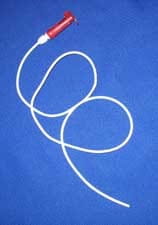
What Do I Need to Know about an NJ Tube?
- The NJ tube is placed by a doctor while using X-ray.
- The NJ tube cannot be replaced by caregivers in the home.
- You need to use a pump to give feedings through an NJ tube.
- You cannot give a bolus feeding through the NJ tube.
- The tube is held in place with tape on the cheek.
How Do I Know the Tube Is in the Right Place?
- Put an ink mark on the tube where it comes out of the nose. This way you can tell if the tube moves in or out.
- Measure the external visible length, EVL, of the tube, from the nose to the end of the tube.
- Before giving any feedings, check the mark on the tube or measure the EVL to make sure the tube is in the right place.
How Do I Give a Feeding?
- Wash your hands with soap and water.
- Check the doctor's orders for the feeding plan and instructions on how to flush the NJ tube.
- Gather the supplies and equipment:
- Feeding pump
- Feeding administration set
- 3V pole
- Formula
- Bottle or container to measure formula
- Small syringe (3 or 5 ml)
- Water
- Open the feeding administration set.
- Use a new feeding administration set every 24 hours.
- Add the formula to the bag.
- Prime, or fill, the tubing of the feeding administration set with formula.
- Put the tubing into the feeding pump.
- Turn the pump on.
- Refer to feeding pump instructions for pump programming.
- Set the rate – how fast the feedings are to go in.
- Set the dose − how much formula is to be given.
- Check to make sure the NJ tube is in the correct place.
- Give a small amount of water to flush the NJ tube to make sure it is open.
- Check doctor’s orders for the amount of water to use.
- Connect the feeding administration set tubing to the feeding tube.
- Open the clamp on the tubing.
- Start the feeding pump.
What Other Things Do I Need to Remember?
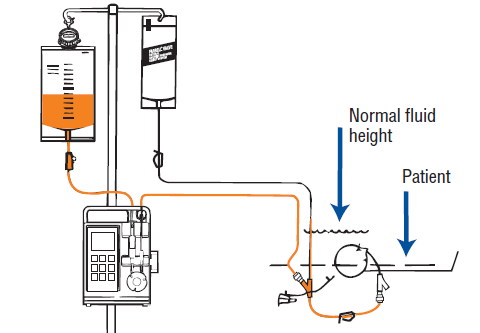
- Never add new formula to formula that is already in the feeding bag. Empty any old formula before adding new formula.
- Flush the feeding tube with 1-5 mls of water before and after giving medications. This helps to keep the feeding tube from clogging.
- It is important to allow your infant or child to have pleasant sensations during feedings: hold them during feedings, let them suck on a pacifier, sit in a high chair, and be a part of family meals.
- Ask your doctor or nurse about therapy to help improve oral skills.
Call Your Doctor If:
- Your child is uncomfortable or irritable with feedings.
- Your child vomits or has diarrhea.
- Your child’s stomach is swollen or bloated.
- The tube has moved or comes out.




