What is Congenital Hypothyroidism?
Congenital hypothyroidism (hy-poh-thy-roi-diz-uhm) (CH) is a condition found in newborn babies. Congenital means that they are born with this condition. All babies are tested for this within the first week of life as part of the newborn screen.
The thyroid gland is found in the neck and is shaped like a butterfly. The thyroid gland makes thyroid hormone that is important for growth and development. This hormone is also important for energy and for the heart, liver, kidneys and skin. When a baby has CH, the thyroid gland is not making enough hormones for the brain and body to grow and develop.
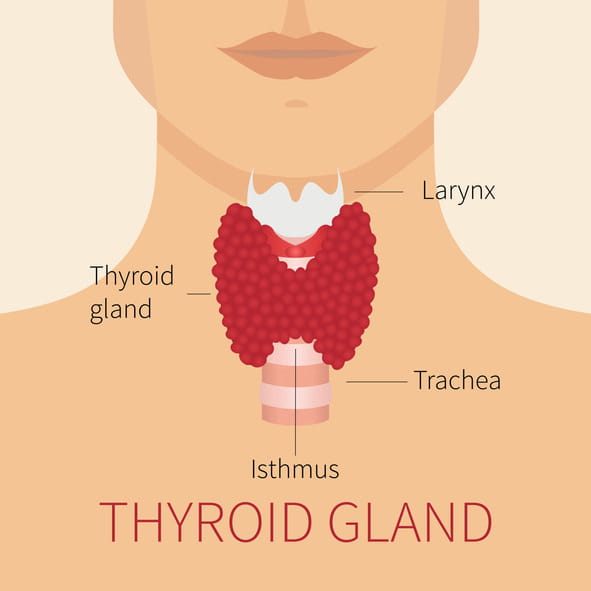
The brain makes a hormone called thyroid-stimulating hormone (TSH). When a child's TSH is too high, the brain works hard to tell the thyroid to make more thyroid hormone. The thyroid gland cannot respond to the signal from the brain, so babies with congenital hypothyroidism who are not on medicine will have a high TSH.
Children who do not take medicine to treat hypothyroidism will have trouble with growing and developing and may have severe developmental delays and brain damage.
What are the Causes of Congenital Hypothyroidism?
One in 4,000 babies are diagnosed with this condition. There are many causes of CH.
- A baby can be born without a thyroid gland.
- The thyroid gland may be in the wrong place.
- The thyroid gland may not work correctly.
Your child's healthcare provider will talk with you about the cause of your baby’s hypothyroidism.
What are the Symptoms of Congenital Hypothyroidism?
CH can have little or no symptoms. Babies who have symptoms may spend less time awake, eat poorly, may have floppy arms and legs, and low energy. Some babies have constipation, yellowing of the skin, and low temperature.
How is Congenital Hypothyroidism Treated?
This condition can be easily treated by taking a medication every day. This medicine is called levothyroxine and it replaces the thyroid hormone that your child's thyroid gland is unable to make. It is very important to make sure your child gets this medicine in the same way every day.
Never change the medicine dose on your own. Your child’s healthcare provider will let you know when medication changes need to be made through follow-up visits in clinic and routine blood tests.
This medicine may be given with small amounts of formula or food. You may break the tablets in half or crush them to make it easier for your child to take. Several substances may prevent the thyroid medicine from being absorbed in the stomach. Please notify your healthcare provider if your child starts any new formula, medicines or supplements.