What is a Mehta Cast?
A Mehta cast is a plaster and fiberglass cast used to help treat early onset scoliosis (EOS). Mehta casts slowly and gently correct spine deformities. They prevent them from getting worse. Your child will have a series of several Mehta casts that are changed every two to three months as they grow.
Scoliosis causes the spine to curve. Mehta casts correct this using a slight pulling on the spine (called traction) and pressure.
Other types of casts can cause rib and chest wall problems in very young children. Most children with Mehta casts do not have these issues. As a result, Mehta casts are now often used as the first line of treatment for early onset scoliosis in kids under age 4.
A Mehta cast will go from your child’s shoulders to the top of the legs. Openings are cut into the front and back of the cast. These create room so your child can eat and breathe easily.
A Mehta cast looks like this:
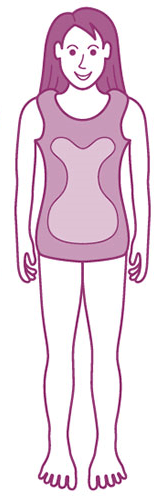
Your child will be able to sit and walk in this cast.
Getting a Mehta Cast Put On
Your child will be put to sleep (have anesthesia) when the cast is applied.
It takes about one hour to put the cast on. First, a soft t-shirt is put on your child that will stay under the cast. This helps protect your child’s skin. The cast is then fit on top of the shirt.
After the first cast is applied, the edges will be trimmed. Tape may be applied to any rough edges to protect the skin. You may hear this called “petaling” because when the tape is put on, it looks like flower petals.
After the cast is on, doctors will take an X-ray to check your child’s spine position.
At first the cast will feel wet, warm, and tight. This tight feeling will go away as the cast dries. Plaster casts take two to three days to fully dry.
Your child will be able to go home the day the Mehta cast is put on or the day after.
Living with a Mehta Cast
For both parents and children, learning to live with the cast takes time.
It is very common for children to be irritable right after getting the cast put on. This is normal after a child has anesthesia. Your child will also be getting used to the cast, which can take a few days. Try to be patient and understanding while they adjust to the cast.
Your child’s balance will likely be off at first, due to the weight of the cast. Stay close while your child gets used to moving around with the cast. Encourage your child to get around on their own but watch closely to help them avoid getting injured.
You’ll need to adjust how you diaper your child once in a Mehta cast. Tuck the front and back of the diaper up under the lower edge of the cast.
You and your child can draw on and decorate the cast once you’re home. Feel free to make it fun for your child by adding colorful duct tape and stickers.
Taking Care of Your Child’s Mehta Cast
Supplies
- You may need moleskin to help prevent rubbing at the edges of the cast. You can get this from the orthopaedic staff in clinic or when the cast is put on. You can also find it at a drug store.
Keeping the Cast Dry
- It is very important to keep the cast dry. Moisture in the cast will cause skin problems. Mehta casts are not waterproof. Do not give your child a regular bath or shower while in a Mehta cast.
- Protect the cast from water by covering it with plastic food wrap, or an oversized plastic bib, apron or salon cape. Do this while your child eats, during sponge baths and when washing hair.
- Let us know in advance if you have any trips planned where you would want your child out of a cast and able to swim and go to the beach. We are happy to work with families to schedule casting around planned vacations.
- If the cast gets slightly wet (such as an accident during a diaper change), gently clean it with a soft cloth and mild detergent. Then dry it with a hair dryer using the cool setting only. Never use a warm or hot setting next to your child’s skin due to the risk of burns.
Keeping the Skin Healthy
Infections of the skin under the cast can cause sores, drainage and a change in the odor of the cast. The following instructions can help prevent such infections:
- Do not put anything under your child's cast. Teach your child not to do this as well. The skin under the cast can be easily scratched and infected.
- If itching occurs, you may blow cool air under the cast from a hair dryer. If itching still bothers your child, call the doctor for a medicine to ease it.
- Never use lotions, creams or powders on the skin around or under the cast. This will soften the skin and the cast. Softened skin is more easily scratched and damaged from the edges of the cast pressure.
- Stay away from sandboxes and the beach while your child is in the cast. Sand in the cast can irritate the skin.
Doing a Daily Health Check
A cast that is too tight or pressing on one area of your child's body too long can slow circulation, press on nerves and/or cause pressure sores.
- Several times a day check your child's arms and legs for changes in color and temperature, ability to move, numbness and tingling.
Personal Care
Bathing
- Instead of a regular bath or shower, you will give your child a sponge bath while they have the Mehta cast. The nurses will give you instructions for how to do this before you leave for home.
- Every day, wash all parts of your child's body not covered by the cast. Remember to not get the cast wet.
Clothing
- Use large, loose clothing to cover the cast. Elastic waistbands work well.
Activity and Safety
- The cast may be heavy, so balance may not be even. Help your child as needed. Encourage their use of handrails when going up and down stairs.
- Do not put your child to bed with a pillow under the head when in a Mehta cast. It will force the head forward and cause pressure on the chin and jaw.
Meals
- Feed your child healthy foods and drinks. A balanced diet will help keep your child healthy. Avoid junk food.
- Fix small meals often rather than three large meals. This will help prevent your child from feeling too full while in the cast.
- Provide extra fluids. This will help your child go to the bathroom regularly.
Follow-Up Care
Your doctor will tell you where and how soon you will need to come back for a checkup. If you have any questions, call the orthopaedic nurse or orthopaedic doctor.
When to Call the Doctor
Call 911 or go to your local ER if your child has trouble breathing.
Call us using the contact information below if:
- The cast gets wet and there is moisture inside that you can’t dry.
- Something becomes lodged between the cast and your child’s body.
- A change in position does not make reddened areas go away after an hour.
- Numbness, stinging or burning occurs under the cast.
- A foul (bad) smell, other than pee, poop or body odor, comes from the cast.
- Your child has pain that is steady or increases and does not get better with medicine or a change in position.
- Your child has a temperature of 101 degrees Fahrenheit or higher.
- The cast becomes soft or cracks.
- Toward the end of the casting period (six to eight weeks or so), your child begins vomiting or burping a lot, their tummy is sticking out of the cast more, or your child is eating and drinking less than normal. This could mean that your child is outgrowing the cast.