Show All
Active Error
Errors that occur every day, at the front line (sharp end); effects are felt immediately
Adverse Event
Injury resulting from a medical intervention
Briefing
A team huddle in which the team identifies roles, responsibilities and goals prior to caring for a patient, particularly in an acute or critical setting
Call Out
Team member alerts the team when an ordered procedure is completed
Closed-Loop Communication
Exchange of information between team members in which team members verify orders, medications and procedures
Debriefing
A post performance evaluation of team performance and an opportunity to identify strengths, weaknesses and systems issues
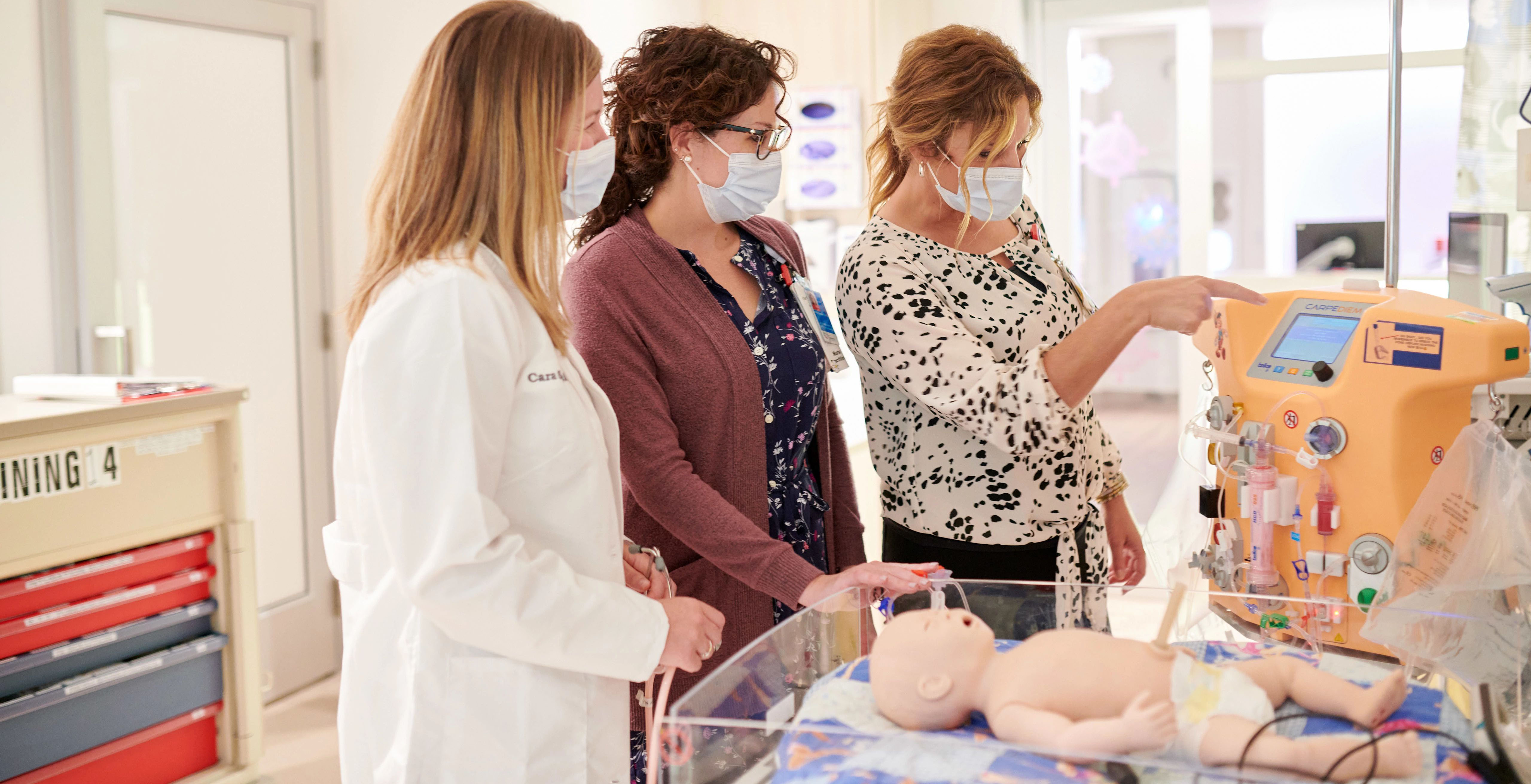
Full Scale Simulation
A full representation of the clinical care environment including realistic contextual cues, team members and manikins
Halo Effect
Deference given to someone due to position or reputation
Haptic
Refers to all the physical sensors that provide a sense of touch at the skin level and force feedback information from muscles and joints
Human Factors
The discipline or science of studying the interaction between humans and systems and technology. The term covers all biomedical and psychological considerations
Latent Error
Errors in the design, organization, training or maintenance that may lead to errors. Effects may lie dormant or unnoticed in system for a period of time
Latent Threats
Aspects of the organization that are not always easily identifiable, but predispose to commission of errors
Manikin (Mannequin)
Full or partial body representation of a patient for practice
Moulage
Simulation of injury or pathology
Non-technical Skills
Communication and teamwork skills
Pinch
Intuitive feeling that something may be wrong
Readback
An order is given; it is written down and read back; it is then acknowledged by giver as correct
SBAR
Acronym for “Situation,” “Background,” “Assessment” and “Recommendation.” It allows a clinical team member to easily and quickly describe the clinical presentation of a patient and make a recommendation for future action. It is a component of effective communication between one healthcare provider and another
Scenario
An initial set of conditions and timeline of significant events used to replicate or re-create a clinical situation to achieve exercise objectives
Serious Safety Event (SSE)
A medical error or deviation from the standard of care resulting in serious harm
Simulator
A setting, device, computer program or system that re-creates essential elements and cues; to encourage experiential learning related to particular educational objectives
Situational Awareness
An individual’s perception of reality as related to the actual situation
Step Back
Dramatic gesture to get immediate attention of team, allowing for reorganization or refocusing of goals and priorities
Target Fixation
Focus on a single task to the exclusion of other input
Task Trainer
A simulator designed to practice specific clinical skills
Team Communication
The exchange of information between team members that is satisfactorily transmitted, received and acted upon
Technical Skills
The actual performance of patient care treatments, i.e. algorithm of care
Threats
Factors that increase the likelihood of an error
Violation
Conscious failure to adhere to procedures / regulations
Virtual Simulation
A simulation involving real people operating simulated systems. Virtual simulations inject a human in a central role by exercising motor control skills (e.g., medical interventions), decision skills or communication skill