Fetal Care Center of Cincinnati

  • Fetal Care Center of Cincinnati
  • Congenital Diaphragmatic Hernia / CDH Overview

    Show All

    What is a CDH?

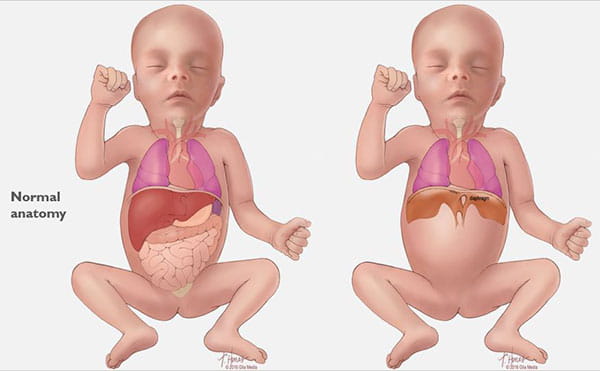
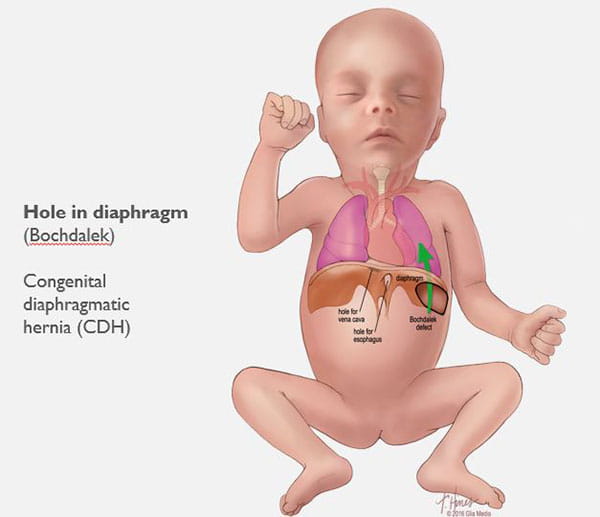
    Congenital Diaphragmatic Hernia / CDH is a defect in the diaphragm of the fetus. The diaphragm is the muscle and tissue that separates the chest and abdominal cavities.

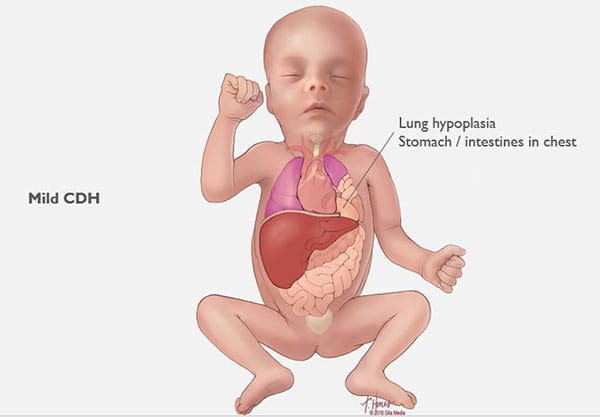
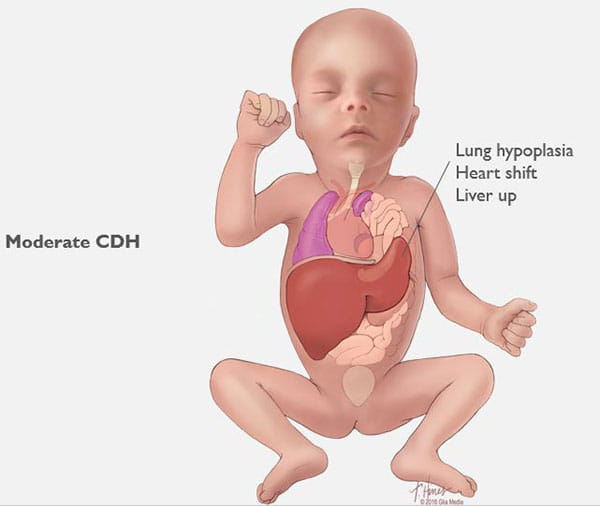
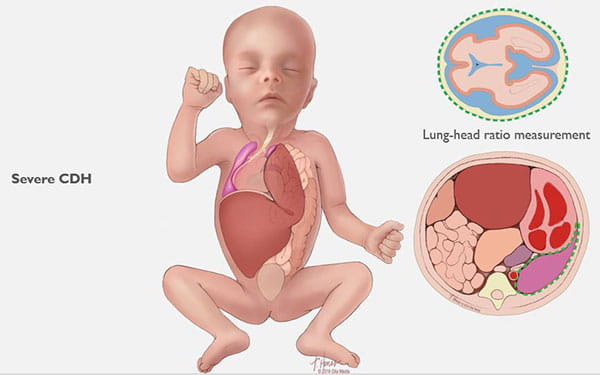
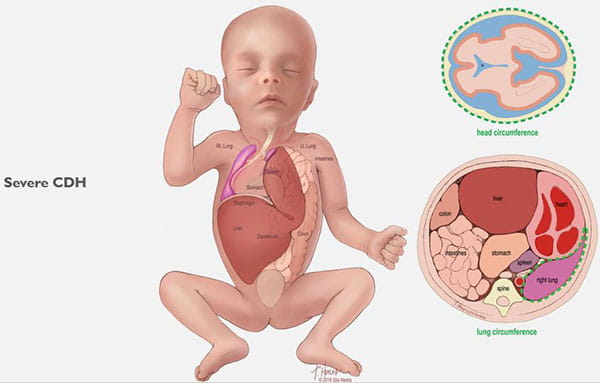
    In Congenital Diaphragmatic Hernia / CDH, abdominal organs push into the chest cavity through the defect (or herniate), compressing the developing lungs. This results in severe pulmonary hypoplasia (arrested development of the lungs), causing the lungs to remain small and underdeveloped.

    The Fetal Care Center has performed more than 150 patient evaluations for fetal CDH. Patients are cared for by a dedicated CDH team consisting of neonatologists, pediatric surgeons, pediatric cardiologists, nurses, nutritionists and therapists.

    What Causes CDH?

    The cause of Congenital Diaphragmatic Hernia / CDH is thought to be failure of the diaphragm to develop at nine to 10 weeks of gestation. When closure does not occur, the intestinal organs may herniate into the chest cavity through the defect in the diaphragm. What causes the failure of the diaphragm to close is unknown.

    What is the Incidence of CDH?

    The incidence of Congenital Diaphragmatic Hernia / CDH is estimated at one in 2,200 births. Survival rate depends, in large part, on the delivery at or the immediate transfer to a tertiary-care hospital where the newborn can be treated promptly by a staff skilled in Congenital Diaphragmatic Hernia / CDH care.

    How is CDH Diagnosed?

    An ultrasound can detect characteristics of Congenital Diaphragmatic Hernia / CDH. Physicians, performing ultrasound, closely examine the entire chest and abdominal area to look for what can be very subtle signs of Congenital Diaphragmatic Hernia / CDH. This diagnosis can also be aided by fetal MRI.

    How is Pregnancy Managed with CDH?

    If Congenital Diaphragmatic Hernia / CDH is suspected, the mother should undergo a detailed ultrasound to confirm the diagnosis and detect associated abnormalities. Prenatal karyotyping (the study of the chromosomes of cells) is recommended because of the high incidence of associated chromosomal abnormalities. Fetal echocardiography is recommended in all cases of Congenital Diaphragmatic Hernia / CDH because of the increased incidence of congenital heart disease. Fetal MRI should be obtained to define the severity of Congenital Diaphragmatic Hernia / CDH.

    What are the Fetal Interventions for CDH?

    The majority of babies with Congenital Diaphragmatic Hernia / CDH will do very well with postnatal treatment in tertiary centers skilled in the management of Congenital Diaphragmatic Hernia / CDH.

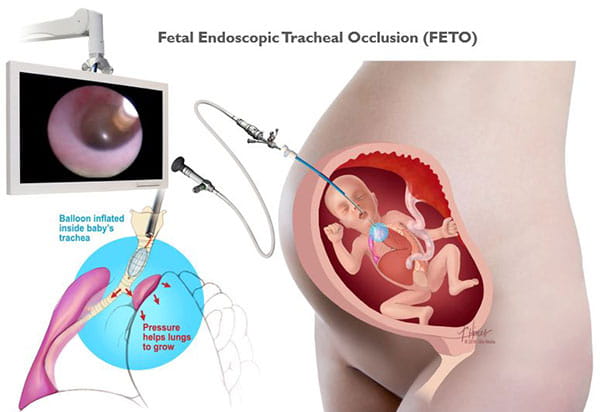
    In select cases, fetal intervention is available for the most severely affected fetuses with very large hernias that have a poor prognosis.

    Depending on the nature of the Congenital Diaphragmatic Hernia / CDH, the fetus may be a candidate for fetal surgery. The Fetal Care Center of Cincinnati offers the EXIT-to-ECMO (ex utero intrapartum treatment to extracorporeal membrane oxygenation) as a management strategy for high risk Congenital Diaphragmatic Hernia / CDH.

    Volumes and Outcomes

    CDH Survival Rates to Discharge (1/1/05-6/30/12)

    CDH TypeSurvival Rate
    Low-risk left CDH 94%
    Defined as: prenatally diagnosed singleton with LHR > 1 (n=42) with minor or no other congenital anomaly or postnatally diagnosed isolated CDH 
    Severe CDH 33%
    Defined as: Observed:Expected LHR < 25% 
    Severe CDH     

    42%

    Defined as: PPLV < 15%, TLV < 18mL, LHR < 1 and liver up*

    * PPLV = percent predicted lung volume
    TLV = total lung volume
    LHR = lung-to-head ratio


  • An illustration of congenital diaphragmatic hernia.

    Click for larger image.

    Congenital Diaphragmatic Hernia / CDH

    An illustration of congenital diaphragmatic hernia.
  • CDH Care

    Families and doctors discuss what makes care for babies born with congenital diaphragmatic hernia superior at Cincinnati Children's and the Fetal Care Center of Cincinnati.

  • Contact Us

    If you would like to request an appointment or get more information about the Fetal Care Center of Cincinnati, please call us at 1-888-338-2559 (1-888-FETAL59).