Help Us Build a Blood and Tissue Bank
You may be able to give samples to a help us find better treatments for blood diseases and other disorders.
What is the purpose of this repository?
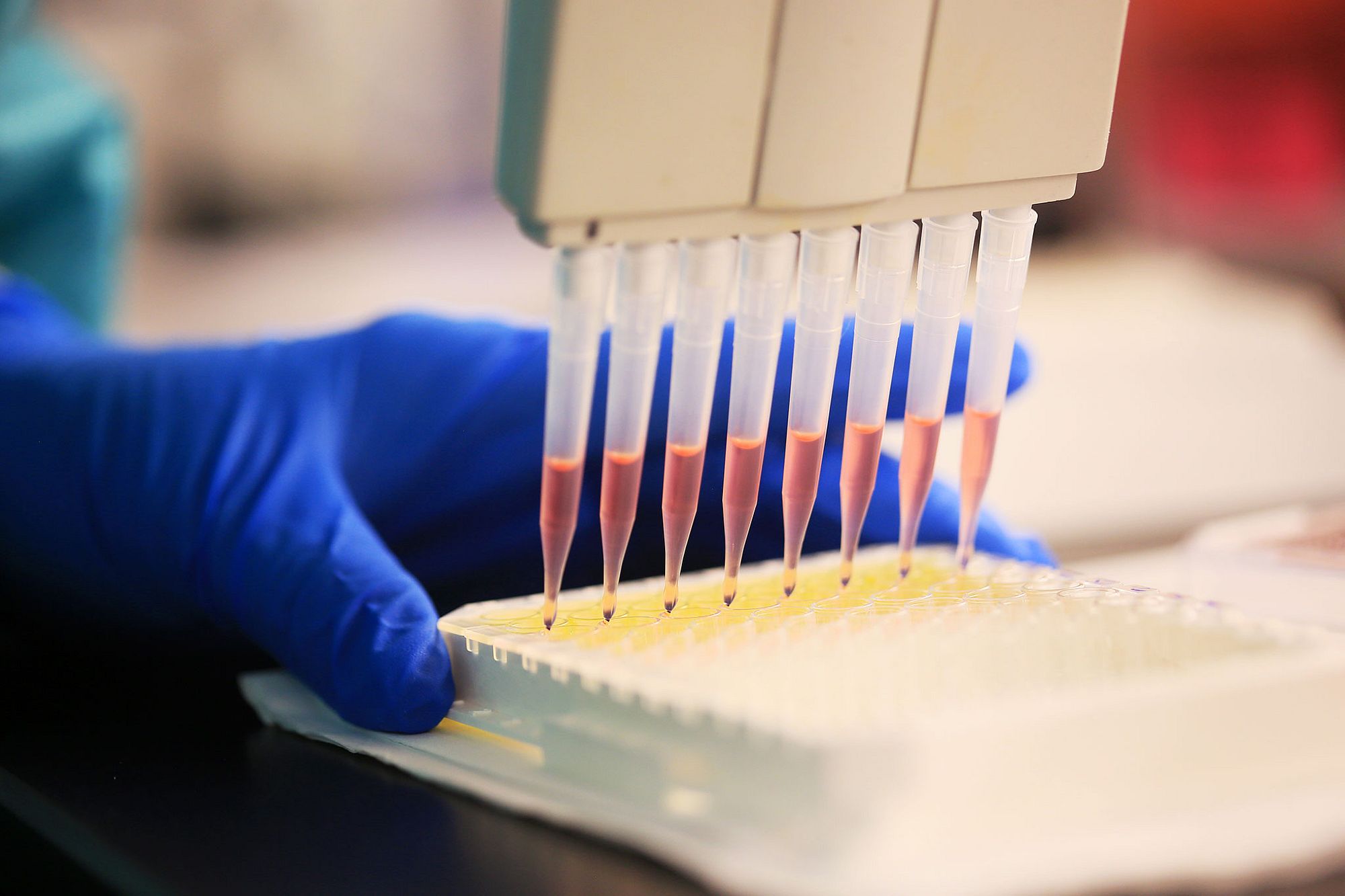
Researchers studying hematology are collecting samples and clinical information to learn more about non-malignant (not cancerous) blood disorders to find better treatments for these disease and possibly other diseases as well. Non-malignant blood disorders include anemia, bleeding and thrombotic disorders, myelodysplastic disorders, neutropenia and white blood cell disorders, such as thalassemia, hemophilia and sickle cell disease.
Who will be included?
Adults and children (all ages) with a known or suspected non-malignant blood disorder may be eligible to donate samples to the research repository.
What samples / information do we need?
You or your child may donate samples of blood, bone marrow, skin tissue, buccal cells (cells inside wall of the mouth), urine, cord blood, spleen, and bone. Your medical information will also be collected. Your name will never be published or released to a non-CCHMC researcher.
What is involved?
You or your child may donate samples of blood, bone marrow, skin tissue, buccal cells (cells inside wall of the mouth), urine, cord blood, spleen, and bone. Your medical information will also be collected. Your name will never be published or released to a non-CCHMC researcher.
Samples can fall into one of three categories: leftover/discarded specimens (samples that are leftover from procedures performed for clinical care), extra draw (samples are being drawn for medical purposes and extra sample is taken for research), or for research only (blood, bone marrow, urine, and buccal cells can be donated for research only). If you or your child chooses to contribute, you can select which type(s) of samples researchers may collect and store.
The samples you choose to donate are usually collected at the same time procedures are being performed for clinical care. Adults may choose to provide bone marrow for research purposes only.
Samples for this study will be stored only when sampling and testing for your medical care are satisfied and complete. If there is only enough sample obtained for medical care purposes, then no repository sample will be stored.
What will be done with the samples?
Your sample(s) will be labeled with a unique patient number and stored indefinitely in a laboratory at Cincinnati Children’s and will be released to researchers as needed. If you decide to allow your samples to be collected and stored, you still have the option to remove the samples at any time. If in the future you ask that your stored samples be discarded, it is important to know that samples that have already been distributed to researchers prior to your withdrawal request cannot be destroyed.
Collection and Storage of Personal and Medical Information:
If you agree to participate, we will use some information from your Cincinnati Children’s medical record such as date of birth, address, past medical and family history, and medical Information.
Some of this information will be collected from your clinical medical record and stored in a separate research database. We will continue to collect this information for as long as you continue to agree to participate.
Access to all identifying and clinical information will be restricted.
Using Stored Samples and Medical Information for Research:
Researchers who want to use your samples for research must request the samples from the Division of Hematology/Oncology at Cincinnati Children’ s. Each request will be carefully evaluated to ensure the samples will be used for good research purposes. As applicable, the researchers must also have approval from the Institutional Review Board (an independent board that ensures the samples will be used in a proper, ethical manner, following federal and state laws).
What are the benefits?
Neither you nor your child will receive a medical benefit from donating samples to this repository. The information learned from any research studies using the samples may benefit future patients with non-malignant blood disorders or other diseases.
Neither you, nor your physician, nor anyone in your family, will receive the results of any research done on your specimens and the results will not be put in your health records. Therefore, results from any research done on your specimens will not affect you or your child’s medical care. This helps protect you and other members of your family from harm that might be caused by this information.
Will I get all the facts about the study?
Parents interested in having their child participate, as well as adults, will meet with a study coordinator who will explain all of the details of the study. The study coordinator will review the consent form and will be sure that all questions are answered. The consent form goes over all of the procedures, the risks, the benefits, and who to contact with questions or concerns. Study procedures will not begin until a parent/guardian or adult has signed this consent form. A child of a certain age may need to sign the consent form and/or give his/her verbal agreement.
What are the risks?
A detailed list of possible risks will be provided to those patients interested in knowing more about the study.
Who should I contact for more information?
Please call (513) 636-6770 or email blood@cchmc.org for more information.