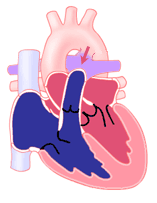
What is Congenital Patent Ductus Arteriosus (PDA)?
While still in the mother's womb, a baby does not need their lungs to supply oxygen because they receive oxygen from their mother. Since a baby's lungs do not provide oxygen, there is no need for the heart to pump blood to the lungs. The ductus arteriosus is a blood vessel that is present in all babies while still in the womb, and it allows blood to bypass the lungs.
When the baby is born and the umbilical cord is cut, their lungs need to supply oxygen to their body. Their lungs expand, their blood vessels relax to accept more blood flow, and the ductus arteriosus usually closes within the first hours of life. Sometimes, the ductus arteriosus does not close on its own. This is known as a patent ("open") ductus arteriosus. While this condition is seen more often in premature babies, it may also appear in full-term infants.
Signs and Symptoms
The symptoms of a patent ductus arteriosus depend on the size of the ductus and how much blood flow it carries. After birth, if a ductus arteriosus is present, blood will flow from the aorta (the main artery in the body) into the pulmonary artery. This extra blood flow into the lungs can overload the lungs and put more burden on the heart to pump this extra blood. Some babies may need more support from a ventilator and have symptoms of congestive heart failure.
A newborn with a patent ductus arteriosus may have:
- Fast breathing
- A hard time breathing
- More respiratory infections
- Tire more easily
- Poor growth
If the patent ductus arteriosus is not large, it may cause no symptoms and your doctor may not find it until they do further evaluation of a heart murmur.
Even if there are no symptoms, the turbulent flow of blood through the patent ductus arteriosus puts a person at a higher risk for a serious infection, known as endocarditis.
Diagnosis of Patent Ductus Arteriosus
Because of turbulent blood flow, a patent ductus arteriosus causes a distinct sounding heart murmur that is heard on physical exam.
The murmur, along with symptoms of heart failure in a premature infant, most often lead to the diagnosis of patent ductus arteriosus. A chest X-ray will show an enlarged heart and evidence of a large amount of blood flow to the lungs. An echocardiogram is done to confirm the diagnosis. Your doctor can see the size of the ductus arteriosus and find out if the heart chambers have become enlarged due to the extra blood flow.
In older children, though, their chest X-ray is typically normal. An echocardiogram will show the flow of blood through the patent ductus arteriosus and is typically done to confirm the diagnosis.
Treatment for Patent Ductus Arteriosus
In a newborn, the patent ductus arteriosus still has the chance to close on its own. Your doctor may allow more time for the patent ductus arteriosus to close if their heart failure is under control. If a newborn’s symptoms are severe or it is unlikely to close on its own, medical or surgical treatment is needed.
Medicines work best for newborns. They may receive medicine, such as indomethacin or ibuprofen, to constrict the muscle in the wall of the patent ductus arteriosus and help it close. These drugs do have side effects, so not all babies can receive them.
Closing the patent ductus arteriosus is a more common option for older infants and children. This includes surgery or closing the PDA in the cardiac catheterization laboratory with a device or coil.
During the cardiac catheterization procedure:
- Your child is either sedated or placed under general anesthesia, depending on their age.
- Catheters are placed into blood vessels in the groin and threaded up the aorta (a large blood vessel), stopping close to the ductus arteriosus.
- A picture (called an angiogram) is taken to define the shape and size of the ductus arteriosus.
- If the ductus is small, the doctor may place a coil within the vessel. For larger openings, the doctor may use a plug-shaped device to block the vessel.
A child, at any age, can have surgery to close the patent ductus arteriosus. Surgery is the best option for a child who has a very large patent ductus arteriosus or other unusual anatomy.
If your child has surgery:
- A small incision is made between the ribs on the left side.
- The ductus arteriosus is tied and cut.
The risk of complications with any of these treatments is low, determined mostly by how ill the child is prior to treatment.
Patent Ductus Arteriosus: Ever a GOOD Thing?
Yes. Some babies have heart defects that require the patent ductus arteriosus to remain open for them to survive.
In some heart defects, such as pulmonary atresia (an underdeveloped or blocked pulmonary valve), the patent ductus arteriosus supplies the only adequate source of blood flow to the lungs so that oxygen can be delivered to the blood. In these patients, the ductus arteriosus supplies blood to the lungs from the aorta.
In other defects, such as underdeveloped or severely narrowed aorta (like that seen in hypoplastic left heart syndrome), the patent ductus arteriosus is crucial to allow adequate blood flow to the body. The ductus arteriosus supplies blood to the body from the pulmonary artery.
Medicine is given, and the baby is watched closely in the intensive care unit. Keeping the patent ductus arteriosus open using this medicine allows time for the newborn to become stable until other treatments, usually surgery, are done.