What is the Anatomy and Function of the Urinary System?
The body takes what it needs from food and changes it into energy. After this, waste products are left behind in the bowel and in the blood. The urinary system keeps everything in balance by removing waste, like urea, extra salt, extra water and other things the body does not need..
Urea is produced when protein, found in meats, is broken down in the body.
Urinary System Parts and Functions
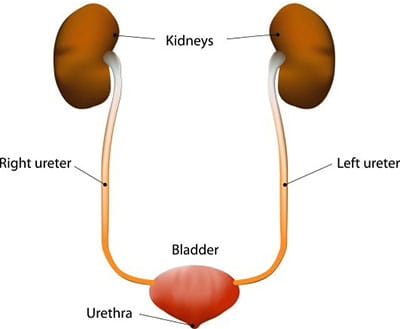
Kidneys
There are a pair of kidneys that are purplish-brown and are located below the ribs in the middle of the back. Their function is to:
- Remove waste from the blood in the form of urine
- Keep substances stable in the blood
- Make erythropoietin, a hormone which helps make red blood cells
- Make vitamin D active
- Regulate blood pressure
The kidneys remove waste from the blood through tiny filtering units called nephrons. Each nephron is made up of a ball of small blood capillaries, called a glomerulus. There is also a small tube called a renal tubule, which drains the urine and joins other tubules carrying the urine out of the kidney to the ureter.
Urea, together with water and other wastes, forms the urine.
Two Ureters
Each kidney has a narrow tube called a ureter, which carries urine from the kidney to the bladder. Muscles in the ureter walls tighten and relax forcing urine down this tube, away from the kidneys. If urine backs up, or stands still, a kidney infection can develop. About every 10 to 15 seconds, urine is emptied into the bladder from the ureters.Bladder
The bladder is a triangle-shaped, hollow organ located in the lower abdomen. It is held in place by ligaments attached to the pelvic bones. The bladder's walls relax and expand to store urine, and contract and flatten to empty urine through the urethra.Two Sphincter Muscles
Circular muscles that help keep urine from leaking by closing tightly like a rubber band around the opening of the bladder.
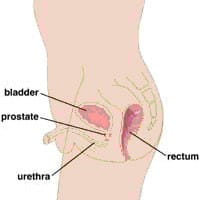
Male Urinary System
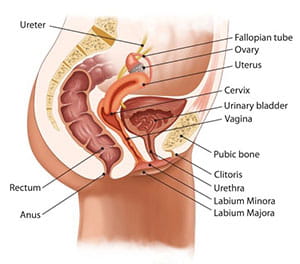
Female Urinary System
Nerves in the Bladder
The nerves alert a person when it is time to urinate, or empty the bladder.Urethra
The tube that allows urine to pass outside the body. The brain signals the bladder muscles to tighten, which squeezes urine out of the bladder. At the same time, the brain signals the sphincter muscles to relax to let urine exit the bladder through the urethra. When all the signals occur in the correct order, normal urination occurs.