What is Hydrocephalus?
Hydrocephalus is a buildup of fluid in the brain, or more precisely, cerebrospinal fluid in the ventricular system, which causes potentially damaging increased pressure in the head. Most children who have it are born with it. It occurs in one or two per 1,000 live births.
The ventricular system in the brain is made up of four chambers that hold most of the cerebrospinal fluid that is in the head. The two upper chambers are called the left and right lateral ventricles. They connect to the third chamber or ventricle, which drains into the fourth.
Cerebrospinal fluid is a water-like substance that acts to cushion the brain within the skull. It also filters waste from tissue in and around the brain.
The cerebrospinal fluid is made in the walls of the ventricles. The fluid flows from the upper ventricles down to the lower ventricles and then over the surface of the brain and around the spinal cord. The cerebrospinal fluid is absorbed over the surface of the brain into the bloodstream.
Cause of Hydrocephalus
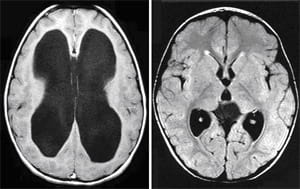
Hydrocephalus (left) and normal brain (right).
Hydrocephalus occurs when the body makes more cerebrospinal fluid than the brain absorbs. A child may be born with this, but it can happen to a person at any age. Older children or adults with an abnormal growth in the head (tumor) or a head injury can develop hydrocephalus.
Hydrocephalus has two base causes: the bloodstream is not fully absorbing the fluid due to a damaged filter in the brain and / or the flow of fluid within the ventricles is blocked.
Any significant block in the ventricular system will cause hydrocephalus since cerebrospinal fluid is made there. This blockage can occur due to a buildup of debris that blocks the flow of fluid or can be from a smaller than normal opening in the ventricular system.
This narrow opening in the ventricular system may happen during the baby's growth in the womb. The debris which collects and creates a blockage can be from an infection or from bleeding (hemorrhage) after birth. A tumor in the head may also block the flow of cerebrospinal fluid.
This buildup of fluid causes increased pressure in the head. If untreated, over time it can cause damage to the brain.
Signs and Symptoms of Hydrocephalus
- Your infant's doctor may order a screening for hydrocephalus if your infant's head is growing more quickly than others his age.
- Headaches and vomiting are signs of increased intracranial pressure, which can result from hydrocephalus.
Treatment for Hydrocephalus
The most common treatment for hydro is inserting a ventricular shunt. A shunt is a tube that drains the CSF from the ventricles to another space in the body, which then absorbs the fluid.
A second type of treatment for hydrocephalus is endoscopic third ventriculostomy (ETV). This procedure has proven more effective at managing hydrocephalus caused by the ventricular system. It is not used for children who have a damaged filter in the brain that does not allow cerebrospinal fluid absorption into the bloodstream.
Preparing for Surgery
Whether your child is getting a shunt or is having endoscopic third ventriculostomy, to help us prepare for a successful surgery, please share with us your child's full medical history.
During the Surgery
Prior to surgery, your child's surgeon will choose the most appropriate surgery, either the shunt or endoscopic third ventriculostomy. The neurosurgeon will discuss the procedure in detail with you before your child's scheduled surgery date, but here is a brief description.
Shunt − The first step in the shunting procedure is placing a ventricular catheter through the skull into the ventricular system. A ventricular catheter is a tube with tiny holes. This catheter is connected to a pressure valve that serves to regulate the amount of spinal fluid drainage.
Another long, thin tube called a distal catheter is attached to the valve. This is the tube that drains the cerebral spinal fluid. The distal catheter and valve are located underneath your child's skin.
Endoscopic Third Ventriculostomy (ETV) − For this procedure, the surgeon makes a small hole in the bottom of the third ventricle so that cerebral spinal fluid bypasses the obstruction and flows into the natural pathways.
Both of these surgeries are performed under general anesthesia and will be scheduled for at least one hour and a half.
After Surgery
Your child will go to the Post Anesthesia Care Unit (PACU) after surgery, and the surgeon will update you on how well the surgery went. When you get a call from the PACU, you may join your child.
Your child will spend one to three nights with us, and we will take care of special dietary needs (general anesthesia may cause an upset stomach). Your child may go home when he or she:
- Is eating and drinking well
- Is walking around without problems
- Is keeping pain under control
- Has had a bowel movement
Before you leave, make sure to schedule a follow-up appointment to see the pediatric neurosurgeon about 14 days after surgery.
Caring for Your Child at Home
Here is some basic information to help you care for your child at home after surgery.
Pain − If your child is under 4 years of age, give regular children's Tylenol as directed for his or her pain. Children older than 4 years may be sent home with a prescription for Tylenol with Codeine.
Diet − Once your child is home, he or she will be on a regular diet. There are some restrictions right after surgery, but since your child will be spending several nights with us, we will restrict the diet as needed during that time.
Wound care − Wash your child's incision each day with a mild shampoo.
Activity − Your child may slowly resume regular activities. Your child may return to school or daycare three to five days after surgery, depending on how he or she feels.
Medication − No medicines are given routinely after hydrocephalus surgery. If your child complains of pain at the site of the incision, give him or her Tylenol.
Bathing – Wash the wound daily with a mild soap or shampoo and rinse with clear water. A shower is fine if your child typically takes showers. Do not let the wound soak in water such as a bathtub or swimming pool until the skin is completely healed.
Follow-up care − About 14 days after surgery, your child will have a follow-up appointment with the Neurosurgery Division for a wound check. During that visit, we may also take more images of your child’s brain. If your child becomes ill in the future, this will help us figure out if hydrocephalus is causing the problem.
Watch your child for any signs of hydrocephalus. These would typically be the same symptoms that prompted the surgery. (See Shunt Malfunction for signs of hydrocephalus.)
Contact Us
Our office hours are 8 am to 4:40 pm, Monday through Friday. Please call 513-636-4726.