Brain, Spinal Cord and Nerve Conditions and Diagnoses

Hydrocephalus

What is hydrocephalus?

Hydrocephalus is a buildup of fluid in the brain, or more precisely, cerebrospinal fluid in the ventricular system, which causes potentially damaging increased pressure in the head. Most children who have it are born with it. It occurs in one or two per 1,000 live births.

The ventricular system is made up of four chambers that hold most of the cerebrospinal fluid that is in the head. The two upper chambers are called the left and right lateral ventricles. They connect to the third chamber or ventricle, which drains into the fourth.

Cerebrospinal fluid is a water-like substance that acts to cushion the brain within the skull. It also filters waste from tissue in and around the brain.

The cerebrospinal fluid is made in the walls of the ventricles. The fluid flows from the upper ventricles down to the lower ventricles and then over the surface of the brain and around the spinal cord. The cerebrospinal fluid is absorbed over the surface of the brain into the blood stream.

What is the cause of hydrocephalus?

Hydrocephalus occurs when the body makes more cerebrospinal fluid than it absorbs. A child may be born with this, but it can happen to a person at any age. Older children or adults with an abnormal growth in the head (tumor) or a head injury can develop hydrocephalus.

Hydrocephalus has two base causes: the bloodstream is not fully absorbing the fluid due to a damaged filter in the brain and / or the flow of fluid within the ventricles is blocked.

Ventricular systems diagram: normal and with hydrocephalus.

Any significant block in the ventricular system will cause hydrocephalus since cerebrospinal fluid is made there. This blockage can occur due to a buildup of debris that blocks the flow of fluid or can be from a smaller than normal opening in the ventricular system.

This narrow opening in the ventricular system may happen during the baby's growth in the womb. The debris which collects and creates a blockage can be from an infection or from bleeding (hemorrhage) after birth. A tumor in the head may also block the flow of cerebrospinal fluid.

This buildup of fluid causes increased pressure in the head. If untreated, over time it can cause damage to the brain.

What are the symptoms of hydrocephalus?

Your infant's doctor may order a screening for hydrocephalus if your infant's head is growing more quickly than others his age. Headaches and vomiting are signs of hydrocephalus in children 18 months or older.

What are the treatment options?

The most common treatment for hydrocephalus is inserting a shunt. A shunt is a tube that drains the cerebrospinal fluid from the ventricles to another space in the body, which absorbs the fluid.

A second type of treatment for hydrocephalus is endoscopic third ventriculostomy (ETV). This procedure has proven more effective at managing hydrocephalus caused by blockage of the ventricle system. It is not used for children who have a damaged filter in the brain that does not allow cerebrospinal fluid absorption into the blood stream.

Should my child and I do anything to prepare for the surgery?

Whether your child is getting a shunt or is having endoscopic third ventriculostomy, to help us prepare for a successful surgery, please share with us your child's full medical history. Please report:

  • any bleeding disorders within the family
  • any medications the child is currently taking
  • any allergies to medication

Please notify us if your child has an allergy to latex (rubber). Any unexplained problems with surgery, watery eyes, sneezing or wheezing while playing with balloons may be due to a latex allergy. Anyone who has had multiple surgical procedures might have such an allergy.

On the day of the procedure a doctor called an anesthesiologist will discuss with you methods of pain control appropriate to your child's size and age.

The anesthesiologist will obtain a thorough history of your child's past anesthetics as well as family reactions to general anesthesia. On the day of the surgery, please be prepared to offer this information; it is very important in preventing possible reactions to anesthetic agents that may be used during the surgery.

Before coming to the hospital, please read the explanation that follows. If your child is old enough to understand, please explain what will happen before, during and after surgery using familiar terms.

Pre-operation checklist

1. Please mark clearly on your calendar the date, time and arrival time for your child's surgery. Surgery for patients who arrive late may have to be rescheduled. Please make arrangements for reliable transportation.

2. Please be sure you understand the eating and drinking instructions. Failing to follow these directions may result in the postponement of the surgery.

Children younger than 12 months

  • Stop solid baby foods, cereal, formula six hours before surgery and restrict your child's diet to clear liquids
  • Stop clear liquids and breast feeding four hours before surgery

Children older than 12 months

  • Stop solid foods, milk, juices, candy, gum (only clear liquids) after midnight the night before surgery
  • Stop clear liquids four hours before surgery

Clear liquids are fluids you can see through:

  • Water
  • Pedialyte"
  • Jell-O"
  • Sprite"
  • Popsicles
  • Clear broth
  • Breast milk but not formula

If your child is younger than 12 months and is having surgery in the afternoon, he or she may have a light breakfast (cereal, toast, a clear liquid) up to eight hours before surgery. Please do not give your child meat or fried, fatty foods for breakfast.

If your child takes daily medication for the heart, asthma or seizures, he or she needs to take the medication the morning of surgery.

Your child should take medicine with a small sip of clear liquid. Do not give antibiotics the morning of the surgery as they can cause nausea and vomiting. If you have questions about your child's medications, please call us, 513-636-4726.

3. Please inform us as soon as possible if your child develops a rash, fever, flu, cold or diarrhea or has been exposed to any communicable diseases like chicken pox, measles, mumps, etc. Surgery may have to be postponed if exposure was recent.

4. To avoid potential bleeding complications, please do not give your child aspirin, Motrin", Advil" or Ibuprofen" for two weeks prior to surgery, except as prescribed. If, by mistake, your child does take any of the medications listed, please let us know; because these medicines interfere with the blood's ability to clot, your child's surgery may have to be rescheduled. Tylenol" is an aspirin-free pain medicine your child may take for pain or fever reduction.

5. Once your child's surgery has been scheduled, please schedule a pre-operative physical with your pediatrician or family doctor for one to three days prior to surgery. This ensures that your child has no illnesses that may complicate surgery or anesthesia, and it also allows your child's doctor to know when your child is having surgery.

The doctor must complete the preoperative history and physical form that you received when you and your child last visited us in neurosurgery. Please bring this completed form with you on the day of your child's surgery.

6. On the day before surgery, a nurse or technologist will take a sample of your child's blood for a complete assessment. The blood center is on the first floor at 3333 Burnet Avenue, Cincinnati. You must take the Pre-operative blood work form with you.

Appointments are not necessary. The hours of operation are Monday - Friday 7 am to 8:30 pm and Saturday, 8:30 am to 4:30 pm. If you have questions, please call the blood center at 513-636-4461.

If your child's neurosurgeon has told you that your child will need a blood transfusion for surgery, you have the option of using the blood provided through Hoxworth Blood Center or of donating through Hoxworth's Directed Donor Program.

Hoxworth believes that the blood obtained through regular donations is as safe as blood secured through directed donors. This is especially true if the directed donor is not the parent or immediate relative. Women who have given birth within the past six months cannot donate blood.

If you are interested in the Directed Donor program, please call Hoxworth, 513-451-0910 or 1-800-830-1091.

7. On the morning of your child's surgery, please wash with Phisoderm" and then rinse your child's:

  • Scalp for 10 minutes
  • Lower back for five minutes
  • Body for five minutes
  • Chest for five minutes
  • Left side of neck for five minutes

This totals 30 minutes of gentle scrubbing and washing.

8. Please arrive at the hospital one hour and a half before the scheduled time of surgery and bring your child's overnight bag, the form completed by your child's pediatrician and your insurance card. If you plan on spending the night with your child while he or she recovers with us, please remember your own overnight bag.

The hospital offers tours of the surgical facilities several days a week. This program is extremely beneficial for both child and family. Please call 513-636-8298 to make reservations for this educational program.

What happens during the surgery?

Prior to surgery, your child's surgeon will choose the most appropriate surgery, either the shunt or endoscopic third ventriculostomy. The neurosurgeon will discuss the procedure in detail with you before your child's scheduled surgery date, but a brief description of these follows.

Shunt -- The first step in the shunting procedure is placing a ventricular catheter through the skull into the ventricular system. A ventricular catheter is a tube with tiny holes. This catheter is connected to a pressure valve that serves to regulate the amount of spinal fluid drainage.

Another long, thin tube called a distal catheter is attached to the valve. This is the tube that drains the cerebral spinal fluid. The distal catheter and valve are located underneath your child's skin.

Endoscopic Third Ventriculostomy (ETV) -- For this procedure, the surgeon makes a small hole in the bottom of the third ventricle so that cerebral spinal fluid bypasses the obstruction and flows into the natural pathways.

Both of these surgeries are performed under general anesthesia and will be scheduled for at least one hour and a half.

What should we expect after the procedure?

Your child will go to the Postanesthesia Care Unit (PACU) after surgery and the surgeon will update you on how well the surgery went. When you receive a call from the PACU, you may join your child.

Your child will spend two or three nights with us, and we will take care of special dietary needs (general anesthesia may cause an upset stomach). When your child is eating and drinking well, has been up walking around successfully and has his or her pain under control, he or she will be discharged home.

Before you leave, make sure that a follow-up appointment with the Pediatric Nurse Practitioner (PNP) is scheduled for seven to 10 days after surgery and a follow-up appointment with the surgeon is scheduled for six to eight weeks after surgery.

Please refer to any of the following sections if you have concerns once you and your child get home.

Pain -- If your child is under four years of age, please administer regular children's Tylenol" as directed for his or her pain. Children older than four years may be sent home with a prescription for Tylenol" with codeine.

Diet -- Once your child is home, he or she will be on a regular diet. There are some restrictions immediately following surgery, but since your child will be spending several nights with us, we will restrict the diet as needed during that time.

Wound care -- You should wash your child's incision each day with a mild shampoo (see home care instructions for a child with cranial incision lines).

Activity -- Your child may resume regular activities gradually upon returning home.

Medication -- No medications are prescribed routinely following hydrocephalus surgery. If your child complains of pain at the site of the incision, please give him or her Tylenol".

Bathing -- The wounds should be washed daily with a mild soap or shampoo and rinsed with clear water. A shower is fine if your child typically takes showers. Please do not let the wound soak in water such as a bath tub or swimming pool until the skin is completely healed.

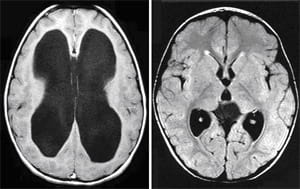
Seven to 10 days after surgery your child will come to the Pediatric Nurse Practitioner (PNP) clinic for a wound check. An MRI of the brain will be part of this routine follow-up. The MRI will show if the opening made in the bottom of the third ventricle is working effectively.

The MRI also gives pictures of the size of your child's ventricles for future comparison. If your child becomes ill, this helps in determining whether or not hydrocephalus is causing problems.

Your child may return to school or daycare three to five days after surgery, depending on how he or she feels. Observe him / her for any signs of hydrocephalus; these would typically be the same symptoms that prompted the surgery. (See Shunt Malfunction for signs of hydrocephalus.)
When should I call the doctor?

Please call the doctor at 513-636-4726 if you are concerned with your child's progress after surgery or if your child experiences:

  • Temperature greater than 102 degrees Fahrenheit
  • Bleeding or drainage from the incision
  • Confusion or excessive sleepiness
  • Severe headache that does not stop with Tylenol" and rest
  • Excessive vomiting (when nothing stays down)

Office hours: 8 am to 4:30 pm, Monday - Friday. For
evenings and weekends, please call 513-636-4200 and ask for the neurosurgeon on-call.

Patient Education Program I 1040
Rev. 3/07
