Show All
December
Our division's director Marc E. Rothenberg, MD, PhD and fellowship program director Kimberly A. Risma, MD, PhD were named among Cincy Magazine's list of Best Doctors for 2013.
November 12
Leading Food Allergy Organizations Announce Completion of Merger and Introduce New Name Read about the merger of the Food Allergy Initiative (FAI) and Food Allergy & Anaphylaxis Network (FAAN) into FARE (Food Allergy Research & Education).
November 5
Frank Sasinowski, Vice Chair of the Board of Directors for NORD, mentions his work and Keynote Speech at the CURED EGID Research Symposium in the FDA Law Blog.
November 2-4
CURED (Campaign Urging Research for Eosinophilic Disease) EGID (Eosinophilic Gastrointestinal Disorder) Research Symposium
November 3
Children's director is Red Cross hero
Read more about the work of our division's business director, Kevin Titus, as he answer questions about his important work as a Red Cross public affairs manager.
November 1
CURED Foundation Makes Generous Donation of $150,000 to the Cincinnati Center for Eosinophilic Disorders Research Efforts. This brings the total amount of money donated to the Center by CURED to $2,114,000 in the past 10 years.
October
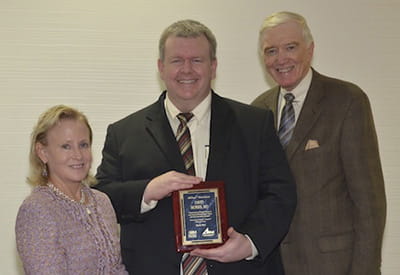
At Cincinnati Children's Recognition Dinner, honoring employees with 10- to 50-year service anniversaries, Amal H. Assa'ad, MD and Thomas J. Fischer, MDfrom our division were honored for their 20 years and 35 years, respectively, of dedicated service at Cincinnati Children's.
October 3
Springdale boy shows super strength, spirit
Read about Jordan Scott and the Eosinophilic Avengers who walked on Saturday, October 20, 2012 at Cincinnati Walks for Kids.
August
Amal H. Assa'ad, MD, having led the Allergy/Immunology Fellowship Program as Fellowship Director for 17 years with dedication and excellence, has passed this role onto Kimberly A. Risma, MD, PhD. We look forward to Amal H. Assa'ad's continued involvement in teaching our future allergists in this combined pediatric and adult fellowship program (via partnership with the University of Cincinnati) as this program is an integral part of our division's mission to improve the health of children with allergic and immune conditions through innovative research, outstanding clinical care, and education of the current and next generation of leaders in healthcare and research.
July 25
CCED and CEFC Annual Interactive Eosinophilic Research Lab Day
Marc Rothenberg, MD, PhD and other pediatrics researchers in his lab and the Cincinnati Center for Eosinophilic Disorders (CCED) hosted their annual interactive eosinophilic research interactive lab day in collaboration with the Cincinnati Eosinophilic Family Coalition (CEFC).
June 6
Clinical Director elected to the AAAAI Board of Directors
Our division's clinical director, Amal H. Assa'ad, MD, was elected to the American Academy of Asthma, Allergy and Immunology (AAAAI)'s Board of Directors.
May 20
CURED Foundation Makes Generous Donation of $150,000 to Support Eosinophilic Research.
May 10
For Teen With Eosinophils of the Esophagus, Food Is Forbidden
In this news article, Marc Rothenberg, MD, PhD, comments on how dietary restrictions can be disabling and that people with eosinophilic disorders have been shown to have the lowest quality of life as compared to a variety of other pediatric chronic diseases.
May 2
Researchers Evaluate Dietary Regimens of Allergic Disease
Marc Rothenberg, MD, PhD, and other pediatrics researchers in the Division of Allergy and Immunology have taken a critical step in improving patient care by evaluating the comparative effectiveness of current dietary therapies (elemental diet, six-food elimination diet, skin test-directed elimination diet) and the utility of skin test-directed diets in food reintroductions for eosinophilic esophagitis.The study found that while all three of the evaluated dietary therapies are effective in decreasing activity of the disease, the elemental diet is superior and using skin testing to direct diets was not helpful compared with empiric removal of certain ‘high risk’ foods.
May 1
Israel's Top 10 Advances in Asthma
In this news article, Ariel Munitz, PhD is mentioned for his recent research collaborative efforts in designing a small antibody fragment that may be able to target the cause of asthma and allergies by targeting a receptor protein on the surface of mast cells.
March 31
How Do You Tell the Difference Between Seasonal Allergies and a Cold?
In this news article, Michelle B. Lierl, MD, comments on how to distinguish between allergies and the common cold, which is important for getting proper treatment.
March 28
Researchers Identify New Regulator in Allergic Diseases
Marc Rothenberg, MD, PhD, and other pediatrics researchers in the Division of Allergy and Immunology have taken a critical step in understanding how allergic reactions occur after identifying a genetic signature for regulation of a key immune hormone, interleukin 13 (IL-13). The study identifies that microRNA 375 is regulated by IL-13, and in turn regulates how IL-13 induces pro-allergic changes, particularly in epithelial cells in the lung and esophagus. The data support a role for microRNA 375 in asthma and eosinophilic esophagitis.
March 26
Passing of Our Friend and Mentor Dr. Leonard I. Bernstein
Our friend, mentor, and beloved colleague. Dr. Leonard Bernstein, a pioneer in the Allergy/Immunology field and founder of Allergy/Immmunology in Cincinnati passed away at age 88, on March 26, 2012. Dr. Bersnstein was the beloved husband of Miriam G. Bernstein, devoted father of Dr. David (Cheryl) Bernstein, Dr. Susan (Howard Ain) Bernstein, Dr. Jonathan (Lisa) Bernstein & the late Ellen B. Ganson (Michael Ganson), dear brother of the late Leah Geber, loving grandfather of Daniel (Jaime Aronson) & William Bernstein, Aaron, Joel (Alyce Baier), Rachel & Marisa Ellison, Jason & Andrew (Emily Sanchez) Ain, Adam, Sarah & Philip Ganson & Alison, Joshua, Rebecca & Caren Bernstein.
With the passing of Dr. I. Leonard Bernstein, his family, the University of Cincinnati, the city of Cincinnati and the field of Allergy and Immunology have lost a great father, friend and a mentor.
Memorial contributions can be made to the Ellen B. Ganson Fund c/o Rockwern Academy, 8401 Montgomery Rd., Cinti, OH 45236 or the Bernstein Endowment Fund for Allergy Research & Education at the U.C. Foundation, P.O. Box 670544, Cinti, OH 45321.
March 9
Genetic Marker for Painful Food Allergy Points to Improved Diagnosis, Treatment
Marc Rothenberg, MD, PhD, and other pediatrics researchers in the Division of Allergy and Immunology have identified a genetic signature for a severe, often painful food allergy – eosinophilic esophagitis – that could lead to improved diagnosis and treatment for children unable to eat a wide variety of foods. The researchers found that EoE was associated with 32 differentially regulated microRNAs and distinguishable from the non-eosinophilic forms of esophagitis (such as reflux disease). Esophageal eosinophil levels correlated significantly with expression of the most increased microRNAs, miR-21 and miR-223, and most decreased, miR-375. MiR-223 was also one of the most increased microRNAs in the plasma, along with miR-146a and miR-146b. Notably, the expression of microRNAs dysregulated in patients with active EoE was normalized in patients with EoE who responded to steroid treatment. This suggests a significantly specific microRNA signature for disease activity points to its promise for use as a biomarker for EoE.
January 6
Asthma Worse for Children in Single-Parent Homes
Terri Moncrief, MD, faculty member of the Division of Allergy and Immunology at Cincinnati Children’s, was the lead author of this study, which found that children from single-parent homes admitted to the hospital for asthma or wheezing are 50 percent more likely to return to the hospital within a year than children from two-parent homes.
November 11
Keynote Presentation at Upcoming Allergy Drug Discovery and Development Conference
Marc Rothenberg, MD, PhD, Director of the Division of Allergy and Immunology at Cincinnati Children's Hospital Medical Center, will be giving a keynote presentation entitled “Breakthroughs in understanding the pathogenesis of the new allergic disease eosinophilic esophagitis and implications for drug development,” at the Allergy Drug Discovery and Development Conference to be held on January 30-31, 2012 in San Diego, CA by GTC.
November 7
CURED Foundation Continues Support of Eosinophilic Research
The CURED Foundation (Campaign Urging Research for Eosinophilic Disease) has pledged another $100,000 to help fund groundbreaking research at Cincinnati Children’s. The gift was made possible by the Vivint Gives Back Project, which hosted a Facebook-based competition among nonprofit organizations in the United States and Canada. The CURED Foundation won a $100,000 prize after receiving the most online votes in their region.
November 1
Mepolizumab Appears Beneficial in Children with Eosinophilic Esophagitis
This news article discusses the promising results of the recently reported clinical trial of the anti-IL-5 monoclonal antibody mepolizumab, which was conducted by Amal H. Assa’ad, MD and colleagues and based on prior pre-clinical and proof-of-concept studies previously conducted by divisional faculty.
August 3
Smithfield Girl Undergoing Treatment for Rare Disease
Marc Rothenberg, MD, PhD, comments on eosinophilic esophagitis as a growing medical problem in this article about a little girl with eosinophilic esophagitis who travels to the Cincinnati Center for Eosinophilic Disorders for treatment.
Eosinophilic Esophagitis: Updated Consensus Recommendations For Children and Adults
The first consensus recommendations for eosinophilic esophagitis were derived from the first symposium held by The International Gastrointestinal Eosinophil Researchers (TIGER), which was comprised of several members of the CCED faculty. These guidelines were published in 2007 as Eosinophilic esophagitis in children and adults: a systematic review and consensus recommendations for diagnosis and treatment.
These original consensus guidelines for eosinophilic esophagitis were reviewed and updated in 2011 and published as Eosinophilic esophagitis: updated consensus recommendations for children and adults, with members of the division faculty contributing in this endeavor.
July 12
Immunobiology Award Recipient
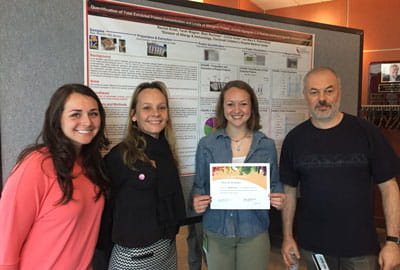
Amanda Beichler, a predoctoral candidate in our division, was awarded first prize for the most outstanding poster in the competition held at Cincinnati Children’s Immunobiology Graduate Program Retreat. Her work was titled “Myeloid RelA/p65 and STAT-6 regulation ofCCL11 and eosinophilic inflammation in colitis.
June 23
MTV Series True Life: I’m Allergic to Everything
Marc Rothenberg, MD, PhD appears in the MTV True Life Series “I’m Allergic to Everything” episode in the segment featuring a young man with eosinophilic esophagitis.
June 6
CURED Foundation Makes Generous Donation
Ellyn, Jori and Fred Kodroff and the CURED Foundation once again showed their generosity by donating $150,000 to our research efforts in the CCED and on eosinophilic disorders on June 6, 2011 in the Division of Allergy and Immunology office. Their commitment, drive and determination to find a cure has made a significant difference in advancing research and our understanding of eosinophilic disorders and will help to change the outcome for families around the world.
June 3
Study Reveals Long-term Outcomes for Children with New Food Allergy Related Disease Eosinophilic Esophagitis
The first study of its kind to examine the long-term natural history of an emerging new disease, eosinophilic esophagitis, has identified factors associated with complications and reveals that children with the disorder have persistent disease into adulthood. The study, published online June 3 in the Journal of Allergy and Clinical Immunology, was conducted by researchers at Cincinnati Children’s Hospital Medical Center, including Marc Rothenberg, MD, PhD. They studied hundreds of people diagnosed with high counts of esophageal eosinophils before eosinophilic esophagitis was known to be a separate disease.
Read more on the study.
May 13
AGA-Stuart Brotman Student Research Fellowship Award Recipient
Akanksha Mishra, a recent high school graduate and previous summer research student in the Division, has received the American Gastroenterological Association (AGA) Research Foundation's 2011 AGA-Stuart Brotman Student Research Fellowship Award. This award provides funds for her to continue research in the Division this summer.
March 28

Allergy or Cold? Ohio Expert Offers Tips to Help Parents
In this news article, Karl von Tiehl, MD comments on how to distinguish between allergies and the common cold, which is important for getting proper treatment.
March 25
How to Tell if You Have Symptoms of Allergies or a Cold
Dr. Karl von Tiehl, an allergist at Cincinnati Children’s, explains the difference between allergies and colds on a local news segment.
March 11

American Association of Immunologists (AAI) Award Recipient
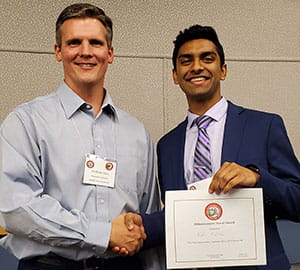
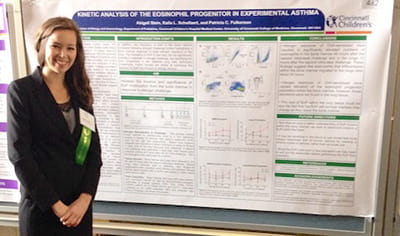
Patricia Fulkerson, MD, PhD, a fellow in training, has received the 2011 AAI-Life Technologies Trainee Achievement Award in recognition of her promise in the field of immunology. The award was presented during the 98th AAI annual meeting in San Francisco.
March 8
DHC Award Recipient
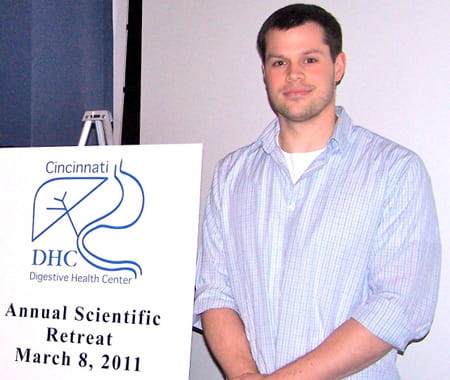
Joseph Sherrill, PhD, a fellow in training, received first place in the poster competition held at Cincinnati Children’s Digestive Health Center Annual Scientific Retreat for his work, titled “Dysregulation of the Desmosomal Cadherin Desmoglein-1 in Eosinophilic Esophagitis.”
February 11
New Pamphlet Guides Patients on Food Allergies
The National Institute of Allergy and Infectious Diseases (NIAID) has released a pamphlet that can be shared with patients, offering a comprehensive overview of food allergies. Download the pamphlet.
December 27
With Children and Food Allergy Diagnoses, Thoroughness is Key
In this news article summarizing current knowledge about food allergies and their diagnosis and treatment, Amal H. Assa’ad, MD, comments on the over diagnosis of food allergies, the insufficiency of a sensitized immune reaction (such as a rash in response to a skin prick test) to the diagnosis food allergy, and the best remedy for an allergic reaction to food.
December 17

CURED Foundation Makes Generous Donation
Ellyn, Jori and Fred Kodroff and the CURED Foundation donated $75,000 to our research efforts on eosinophilic disorders in a check presentation in the Division of Allergy and Immunology office. Their commitment, drive and determination to find a cure has made a significant difference in advancing research and our understanding of eosinophilic disorders and will help to change the outcome for families around the world. http://www.curedfoundation.org/
December 6
Division Faculty Plays Key Role in Report − Guidelines for Food Allergy Testing Revised
Amal H. Assa’ad, MD, comments on the need for consistent follow-up for food allergy in this article about the insufficiency of using skin prick and blood tests alone for food allergy diagnosis. See also Cincinnati Children’s summary of this article called Food Allergy Testing: Skin Pricks May Just Scratch the Surface.
November 10

Local Family Raises Donations for Eosinophilic Research
The Kramer family and friends organized a golf tournament in Cincinnati, raising $4,500 for the Cincinnati Center for Eosinophilic Disorders. The initiative came from 5-year-old Arianna. We celebrated her enthusiasm, spirit and gift at a check presentation in the Division of Allergy and Immunology offices. We are constantly made aware of and humbled by the strength, determination and kindness of children living with eosinophilic disorders.
October 2
Way to Turn Off Immune System’s Allergic Reaction Discovered
The findings provide hope that the body could be trained to tolerate food allergies that lead to roughly 300,000 emergency room visits and 100 to 200 deaths each year.
July 29
FDA Drug Safety Communication: Eosinophilic Pneumonia Associated with the Use of Cubicin (daptomycin)
The FDA informs patients and healthcare professionals about the potential for developing eosinophilic pneumonia during treatment with Cubicin (daptomycin), an intravenous antibacterial drug.
Doctor at Cincinnati Children’s Receives Prestigious NIH MERIT Award to Extend Research of Eosinophilic Disorders
Marc Rothenberg, MD, PhD, director of the Division of Allergy and Immunology at Cincinnati Children’s, has received an NIH MERIT Award to extend funding of his long-standing investigation into “Regulation of Gastrointestinal Eosinophils.”
July 15

Angels for Eosinophilic Research: Dallas Families Unite with Hopes to End Suffering Caused By Eosinophilic Gastrointestinal Disorders
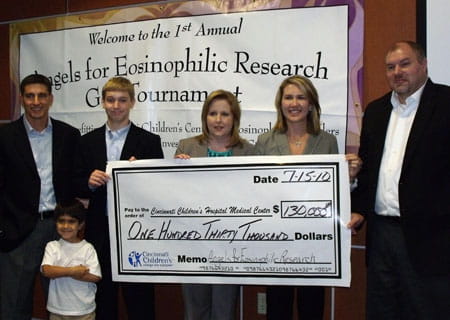
Angels For Eosinophilic Research is dedicated to raising money for research for a cure for Eosinophilic (EOS) Disorders. They hope to bring awareness to the world of the strength, faith, and courage of every person fighting this disease. The Angels for Eosinophilic Research fundraising and golf tournament in Dallas, Texas raised $130,000 dollars in their first ever event. The Zicarelli and Angel families, with their sons Luke and Zeke leading the way, combined efforts to raise money for research here at the Cincinnati Center for Eosinophilic Disorders (CCED). The CCED team and hospital officials came together on July 15, 2010 to accept their generous donation and to celebrate their great accomplishment.
July 14
NIH Expands Food Allergy Research Program
The National Institutes of Health announced that the funding for the Consortium of Food Allergy Research (CoFAR) will be renewed with a five-year, $29.9 million grant. CoFAR will continue to foster new approaches to prevent and treat food allergies and also expand in scope to include research on the genetic causes underlying food allergy and studies of food allergy-associated eosinophilic gastrointestinal diseases. A portion of this funding will allow Marc Rothenberg, MD, PhD, to further investigate the genetics of eosinophilic esophagitis and its treatment.
June 16
Endowment Boosts Female Researchers
The Charlotte R. Schmidlapp Women’s Scholars Program, which awarded Kimberly Risma, MD, PhD, the Schmidlapp award last year, has received a $2 million endowment.
May 24
Rare Disease Makes Scottsdale Boy Reject Solid Food
Marc Rothenberg, MD, PhD, comments on the state of research and lives of children with eosinophilic gastrointestinal disorders in this article about a Cincinnati Children’s patient.
May 18
National Registry to Track Eosinophilic Disorders
A $1.6 million federal economic stimulus grant awarded by the National Institute of Diabetes and Digestive and Kidney Diseases has helped to launch the Registry for Eosinophilic Gastrointestinal Disorders (REGID). “This registry provides the infrastructure necessary for understanding and treating eosinophilic disorders at a national level, and ultimately, at the international level,” says Marc Rothenberg, MD, PhD, the principal investigator and developer of REGID. The registry is the first of its kind for eosinophilic disorders and will allow participating centers to build a database of research-accessible clinical information for thousands of patients coping with eosinophilic disorders. The registry will help researchers find patients for clinical trials, compare treatment outcomes and expand knowledge about these unusual conditions.
March 8
Gene Site Found for a Children’s Food Allergy

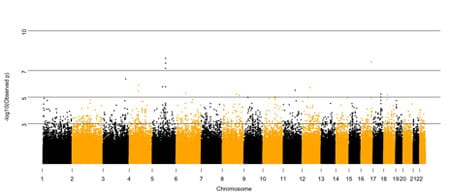
Marc Rothenberg, MD, PhD, and other pediatrics researchers in the Division of Allergy and Immunology have identified the first major gene location responsible for a severe, often painful type of food allergy, eosinophilic esophagitis, that leaves its victims unable to eat a wide variety of foods. This type of food allergy, eosinophilic esophagitis, also may cause weight loss, vomiting and heartburn. The gene site linked to eosinophilic esophagitis plays a key role in inflammation.
After performing a genome-wide association study, the study team found eosinophilic esophagitis was linked to a region of chromosome 5 that includes two genes. The likely culprit is the gene TSLP, which has higher activity levels in children with eosinophilic esophagitis compared to healthy subjects. In addition, TSLP has been previously linked to allergic inflammatory diseases, such as asthma and the skin inflammation atopic dermatitis.
The shown image is a Manhattan plot of the meta-analysis of the patient cohorts of Cincinnati Children’s and the Children’s Hospital of Philadelphia. Each dot represents a single-nucleotide polymorphism, and the higher the –log10 p-value (y-axis value) the more significant the association of the genetic polymorphism with eosinophilic esophagitis.
January 7
Food Allergy Sufferers find Socializing Tricky
Karl von Tiehl, MD, comments on the effects of food allergies on the human body. Read the article.
December 22
American Academy of Allergy, Asthma & Immunology (AAAAI) Abstract Award Recipient
Charles DeBrosse, MD, a fellow in training, has received the 2010 American Academy of Pediatrics Section on Allergy and Immunology Outstanding Pediatric Abstract Award. The award was announced during the International AAAAI meeting in New Orleans. DeBrosse presented a talk, “The ‘Epidemic’ of Eosinophilic Esophagitis (EE) is due to Increased Recognition of a Chronic Disorder.”
December 11
Managing Food Allergies During Holiday Season
Karl von Tiehl, MD, gives suggestions on managing your child’s food allergies during this holiday season. Read the article.
December 8
Allergies Linked to Delaying Solid Foods
Li Zuo, MD, commented on delaying introduction of solid foods.
December 8
ACAAI: Gelatin a Culprit in Some Vaccine Reactions
Li Zuo, MD, commented on delaying introduction of solid foods. Read the article.
May 14
Food Allergy & Anaphylaxis Network (FAAN) Committed to Food Allergy Research and Awards Grants to Two Cincinnati Children’s Researchers
The Division of Allergy and Immunology’s Marc Rothenberg, MD, PhD, director, and Simon Hogan, PhD, assistant professor, are two of six leading scientists across the country to share a $1.1 million grant for food allergy research. The funding is provided by the Food Allergy & Anaphylaxis Network (FAAN) and represents the largest commitment since FAAN’s research grant program began in 2004. To date, more than $4.3 million has been awarded to scientists who are studying the areas of epidemiology, etiology, treatment and prevention of food allergy and anaphylaxis.
The six scientists are working on potential food allergy vaccines and therapies, painstakingly studying anaphylaxis to better understand it, and trying to solve the mysteries of food allergy development. Rothenberg’s project focuses on developing new diagnostic and treatment approaches for eosinophilic esophagitis, an emerging type of food allergy and disorder characterized by the infiltration of a large number of eosinophils (a type of white blood cell) in the esophagus. He hopes to uncover the molecular basis for eosinophilic esophagitis.
Hogan is studying anaphylaxis by comparing the levels of IL-9, a factor in the body thought to be associated with anaphylaxis, in children who are at risk for this life-threatening reaction to levels in children who are not at risk. This information could help in the diagnosis of food-triggered, life-threatening anaphylaxis.
Other projects include a study of the association between vitamin D and the development of food allergy among children; a study of the use of DNA vaccines to suppress the allergic response toward the major shrimp allergen in an effort to design therapeutic vaccines for food allergy; and developing a new therapeutic approach to peanut allergy through a vaccine.
Each of the six projects is funded in the range of $50,000 to $150,000 per year for up to two years. Read the article.