
Ernest Pedapati, MD, MS, FAAP
- Member, Division of Child and Adolescent Psychiatry
- Member, Division of Neurology
- Professor, UC Department of Psychiatry and Behavioral Neuroscience
- Board Certified


About
Biography
I am a child and adolescent psychiatrist and physician-scientist in the divisions of child and adolescent psychiatry and neurology at Cincinnati Children’s and a professor in the University of Cincinnati Department of Psychiatry and Behavioral Neuroscience. I specialize in the evaluation and treatment of children, adolescents and young adults with neurodevelopmental and neuropsychiatric conditions, including autism spectrum disorder, fragile X syndrome, ADHD and other genetic or developmental disorders associated with complex behavioral and psychiatric symptoms.
My clinical work emphasizes thoughtful interdisciplinary assessment, advanced medication management and long-term treatment planning for patients whose needs span psychiatry, neurology and developmental medicine. I am particularly interested in translating advances in neuroscience into more precise and clinically useful approaches for individuals with developmental disabilities and related psychiatric conditions.
My research focuses on translational neurophysiology, with an emphasis on EEG and other biomarkers that improve understanding of brain function in neurodevelopmental disorders and support the development of targeted treatments. My work has centered on fragile X syndrome, autism spectrum disorder and related conditions, including studies of sensory processing, cortical excitability, language and cognition and treatment response. I have also contributed to clinical and translational research involving transcranial magnetic stimulation, neuromodulation and biomarker-guided clinical trials.
In addition to my work in fragile X syndrome and autism, I serve as the Cincinnati EEG lead for the NIH-funded Healthy Brain and Child Development Consortium, contributing to large-scale efforts to better understand early brain development. My work has been recognized through institutional and national awards, and I am frequently invited to present on translational EEG biomarkers and fragile X research at national and international meetings.
While my clinical and research roles are distinct, they are closely connected by a shared goal of improving outcomes for children and families through rigorous neuroscience, careful clinical judgment and collaborative translational research.
MD: University of Massachusetts, Worcester, MA, 2009
Residency: Pediatrics/Adult Psychiatry/Child Psychiatry, Cincinnati Children's Hospital Medical Center, Cincinnati, OH
Certifications: Child and Adolescent Psychiatry; Adult Psychiatry; Addiction Psychiatry
Interests
Neurodevelopmental disorders; fragile x syndrome; autism spectrum disorder; ADHD; severe, refractory mental illness
Interests
Clinical trials; brain computer interface; transcranial magnetic stimulation; gene therapy; fragile x syndrome; EEG
Locations (2)


Insurance Information
Cincinnati Children's strives to accept a wide variety of health plans. Please contact your health insurance carrier to verify coverage for your specific benefit plan.
Publications
Impaired perceptual learning in a mouse model of Fragile X syndrome is mediated by parvalbumin neuron dysfunction and is reversible. Nature Neuroscience. 2018; 21(10):1404-1411.
FMR1 gene therapy restores translationally relevant phenotypes in a mouse model for fragile X syndrome. Gene Therapy. 2026; 33(5):515-531.
Brief Report: A Double-Blind, Placebo-Controlled, Crossover, Proof-of-Concept Study of Minocycline in Autism Spectrum Disorder. Journal of Autism and Developmental Disorders. 2025; 55(9):3387-3394.
Hyper-extralemniscal model of Fragile X syndrome. Cerebral Cortex. 2025; 35(6).
Patterns in Medication Use for Treatment of Depression in Autistic Spectrum Disorder. Journal of Autism and Developmental Disorders. 2025; 55(6):1969-1975.
Results from a Double-Blind, Randomized, Placebo-Controlled, Single-Dose, Crossover Trial of Lovastatin or Minocycline in Fragile X Syndrome. Journal of Child and Adolescent Psychopharmacology. 2025; 35(4):211-221.
Probing the Neurodynamic Mechanisms of Cognitive Flexibility in Depressed Individuals with Autism Spectrum Disorder. Journal of Child and Adolescent Psychopharmacology. 2025; 35(4):231-243.
Accelerated Theta Burst Transcranial Magnetic Stimulation for Refractory Depression in Autism Spectrum Disorder. Journal of Autism and Developmental Disorders. 2025; 55(3):940-954.
Frontal cortex hyperactivation and gamma desynchrony in Fragile X syndrome: Correlates of auditory hypersensitivity. PLoS ONE. 2025; 20(5):e0306157.
Specialization of the brain for language in children with Fragile X Syndrome: a functional Near Infrared Spectroscopy study. Journal of Neurodevelopmental Disorders. 2024; 16(1):69.
From the Blog
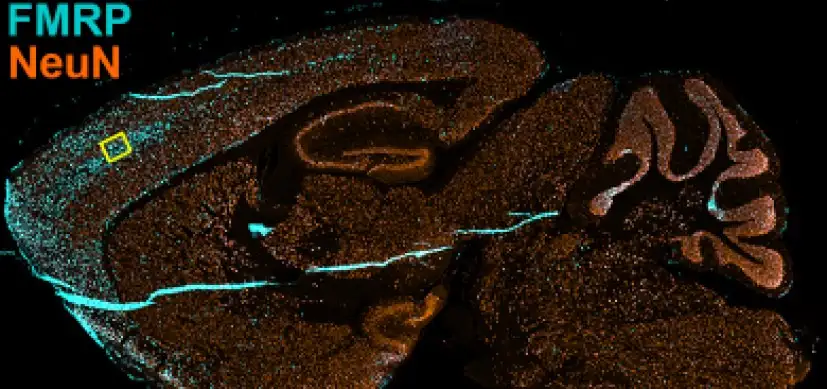
Gene Therapy Restores Key Fragile X Traits in Preclinical Study
Ernest Pedapati, MD, MS, FAAP, Christina Gross, PhD ...7/14/2026

Exploring How Thalamocortical Modulation Impacts Brain Function in Fragile X Syndrome
Ernest Pedapati, MD, MS, FAAP, Craig A. Erickson, MD5/11/2022

3333 Burnet Avenue, Cincinnati, Ohio 45229-3026
© 2026 Cincinnati Children's Hospital Medical Center. All rights reserved.


Patient Ratings and Comments
All patient satisfaction ratings and comments are submitted by actual patients and verified by a leading independent experience management company, Qualtrics. Patient identities are withheld to ensure confidentiality and privacy. Only those providers whose satisfaction surveys are administered through Cincinnati Children’s Hospital Medical Center are displayed. Click here to learn more about our survey