What is Adrenal Insufficiency?
Adrenal insufficiency is a condition in which the adrenal glands (located on top of each kidney) are not able to make the right amount of important hormones.
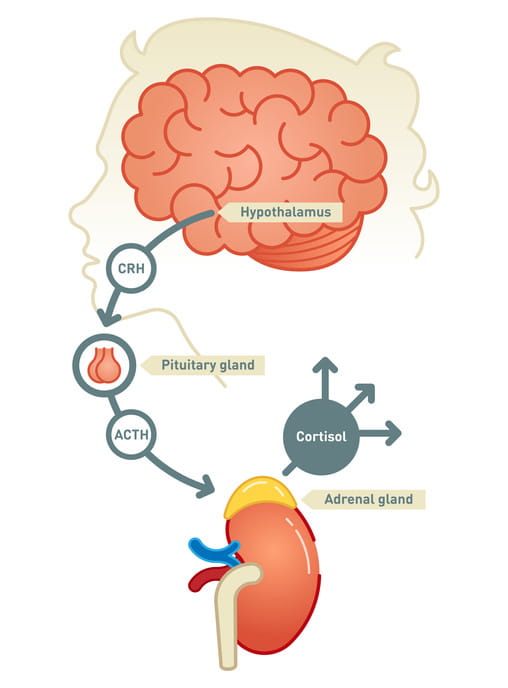
These hormones include cortisol (kawr-tuh-sawl) and aldosterone (al-dos-tuh-rohn). They help keep blood pressure and blood sugar normal, as well as maintain salt and water balance. These hormones are also important when the body needs to fight an infection or recover from surgery, a broken bone or other illness.
Adrenal insufficiency can be life threatening if not treated properly.
What Causes Adrenal Insufficiency?
Adrenal insufficiency can happen:
- When the adrenal glands are not working right due to a problem with the glands
- When the adrenal glands are not getting the right signal from the brain to make enough hormones
- As a result of long-term steroid use
What are Symptoms of Adrenal Insufficiency?
Symptoms of adrenal insufficiency include:
- Nausea or vomiting
- Cold, clammy skin
- Fast heartbeat or fast breathing
- Weakness, dizziness, paleness
- Confusion
- Dry mouth, thirst, decrease in urine (signs of dehydration)
How is Adrenal Insufficiency Treated?
If the adrenal glands do not make enough cortisol on their own, medication must be taken (hydrocortisone, dexamethasone or prednisone).
Children will need extra doses of steroids if they become sick. Parents will need instructions on when to give extra doses of medicine and how to give an emergency injection in the muscle if your child becomes very ill.
This video shows how to give a hydrocortisone injection.
When to Call the Doctor
Call your endocrinology provider if your child is ill and needs more than two days of extra doses of steroid medicine, or if your child needs the emergency injection.