Current Projects
Learn more about current projects in the Mout Lab.
Learn more about current projects in the Mout Lab.
Proteins are the workhorses of cellular function, performing a myriad of essential tasks from catalyzing biochemical reactions to fighting diseases. Our research focuses on building ‘brand new’ protein molecular machines to strengthen our immune system’s function and to develop novel therapeutics.
We employ groundbreaking computational protein design approaches (e.g., Rosetta, RFdiffusion, and AlphaFold2/3) to engineer novel protein structures with specific functions. We are using a combination of computational and experimental techniques (at biochemical, cellular, and animal level) to design a novel class of ‘Humanized’ de novo proteins. This includes designing proteins that can activate immune cells to target specific cancer cells and help regenerate certain immune cells to fight off various diseases.
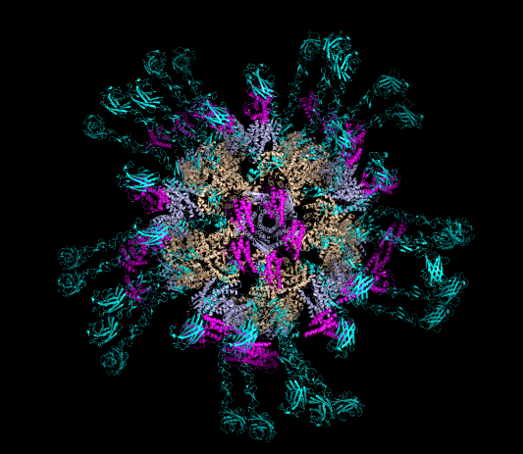
Computationally designed Multi-signaling Protein Complex (MSPC). Image credit: Rubul Mout.
T cells act as the immune system's frontline warriors, constantly patrolling the body to detect and eliminate abnormal cells, including cancer. Their ability to recognize tumor- associated antigens (TAAs) allows them to target and destroy cancer cells. Unfortunately, cancer cells often escape detection because they are highly heterogeneous and may express TAAs at very low levels. In addition, tumors can actively suppress or manipulate T cells, weakening their killing ability and allowing the cancer to persist.
To overcome this, we apply breakthrough protein design technologies that create novel molecules capable of guiding T cells toward otherwise "invisible" cancer cells. These designed proteins simultaneously search for multiple, low-expressing TAAs, ensuring more reliable and comprehensive tumor detection.
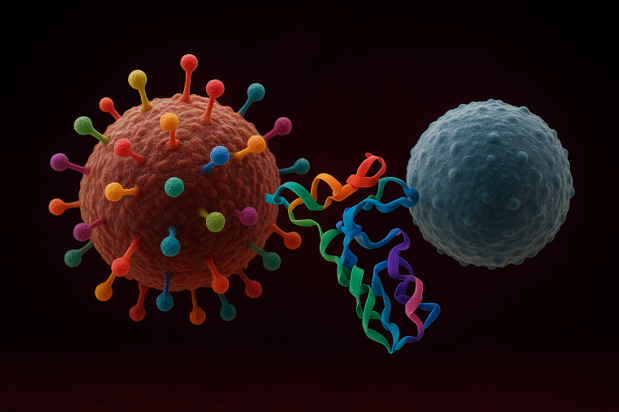
Designed proteins to boost T-cell function. Image credit: Rubul Mout.
As we age, our immune system undergoes significant changes that can impact our ability to fight infections and respond to vaccines. This phenomenon, known as immunosenescence, is characterized by a decline in both innate and adaptive immune responses.
Our research focuses on understanding the molecular mechanisms underlying these age-related changes and developing strategies to rejuvenate or enhance immune function in older individuals. We use protein design approaches to create molecules that can stimulate specific immune pathways in T cells and restore immune cell function.
This work has important implications for improving vaccine efficacy in elderly populations, enhancing cancer immunotherapy outcomes, and developing treatments for age-related inflammatory conditions.
Dendritic cells (DCs) train T cells, which then fight diseases. There are several types of DCs, including cDC1, which are particularly important for activating killer T cells (CD8+ T cells). However, cDC1s are relatively rare in the body. Their generation depends on highly specific molecular signaling pathways that are extremely difficult to manipulate in vivo. If successful, however, this approach could enable a fundamentally new way to design vaccines and immunotherapies.
Our research focuses on designing multi-signaling protein complexes (MSPCs) that can simultaneously activate multiple signaling networks, thereby enabling the generation of cDC1s from hematopoietic progenitor cells. The ultimate goal of this research is to develop powerful new cancer vaccines.
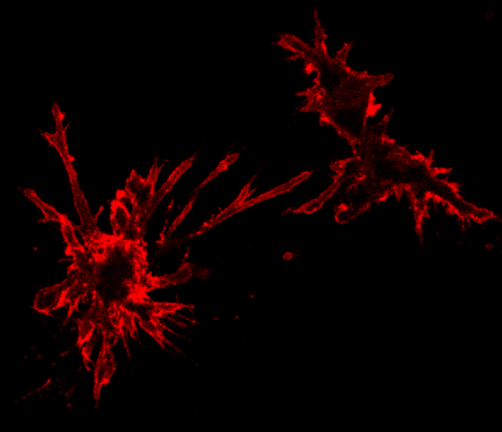
Dendritic cells. Image credit: Rubul Mout.

3333 Burnet Avenue, Cincinnati, Ohio 45229-3026
© 2026 Cincinnati Children's Hospital Medical Center. All rights reserved.


