What is Bronchiolitis?
Bronchiolitis is a common infection of the small air passage (bronchioles) of the lungs in young children and infants, causing swelling, irritation and a build-up of mucus.
Bronchiolitis is a common infection of the small air passage (bronchioles) of the lungs in young children and infants, causing swelling, irritation and a build-up of mucus.
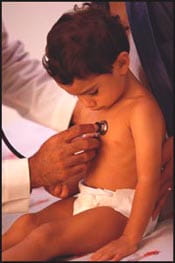 Viruses cause bronchiolitis. Respiratory syncytial virus (RSV) is the most common cause of bronchiolitis. Many other viruses that cause colds in older children and adults can cause bronchiolitis in infants.
Young children catch a virus during close contact with other children, family members and those who are infected. The virus spreads when an infected person coughs or sneezes while in close contact with another child or adult. The virus can also be spread by hands touching contaminated objects or surfaces then touching eyes, nose or mouth. Children usually start to feel sick about three to seven days later.

Last Updated 02/2026
Learn more about our editorial policy.

3333 Burnet Avenue, Cincinnati, Ohio 45229-3026
© 2026 Cincinnati Children's Hospital Medical Center. All rights reserved.


