What is Bronchiolitis?
Bronchiolitis is a common infection of the small air passage (bronchioles) of the lungs in young children and infants, causing swelling, irritation and a build-up of mucus.
Symptoms start like a common cold (fever, cough, stuffy nose) that may get worse over time. Bronchiolitis is usually caused by viruses. RSV (respiratory syncytial virus) is the most common cause.
Bronchiolitis happens during winter and early spring, and affects the entire respiratory tract, including the bronchioles. The bronchioles are the smallest air passages in the lungs.
Bronchiolitis usually begins with a cold, often symptoms of fever, runny nose or nasal stuffiness, and poor appetite or difficulty with sucking in infants. After two to four days, the virus spreads to the bronchioles, causing irritation and narrowing of these air passages. This results in a whistling sound (wheeze) when breathing out.
Bronchiolitis is usually mild. Your child will likely get better after three or four days. But sometimes the infection is more serious. Admission to the hospital may be needed.
Viruses cause bronchiolitis. Respiratory syncytial virus (RSV) is the most common cause of bronchiolitis. Many other viruses that cause colds in older children and adults can cause bronchiolitis in infants.
Young children catch a virus during close contact with other children, family members and those who are infected. The virus spreads when an infected person coughs or sneezes while in close contact with another child or adult. The virus can also be spread by hands touching contaminated objects or surfaces then touching eyes, nose or mouth. Children usually start to feel sick about three to seven days later.
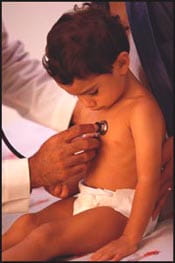
Your child’s provider will diagnosis bronchiolitis by physical exam and review your child’s symptoms with you. Your provider will listen to your child’s lungs, see how hard they are working to breathe, and check their oxygen level.
No medical tests are needed to diagnosis bronchiolitis. Sometimes, a nasal swab specimen will be taken to determine the type of virus causing the problem.
If your child’s oxygen level is low or your provider is concerned for pneumonia, they may get an X-ray of the lungs.
Since bronchiolitis is caused by a virus, infants generally get better with supportive care at home. Treatments that can be done at home include:
Talk to your child’s healthcare provider about any medications for fever management or comfort. Babies and young children should not be given any aspirin or cough and cold medication.
In some cases, children may need to be admitted to the hospital for additional care, including more frequent suctioning, oxygen, IV fluids and monitoring.
Last Updated 02/2026
Learn more about our editorial policy.
